
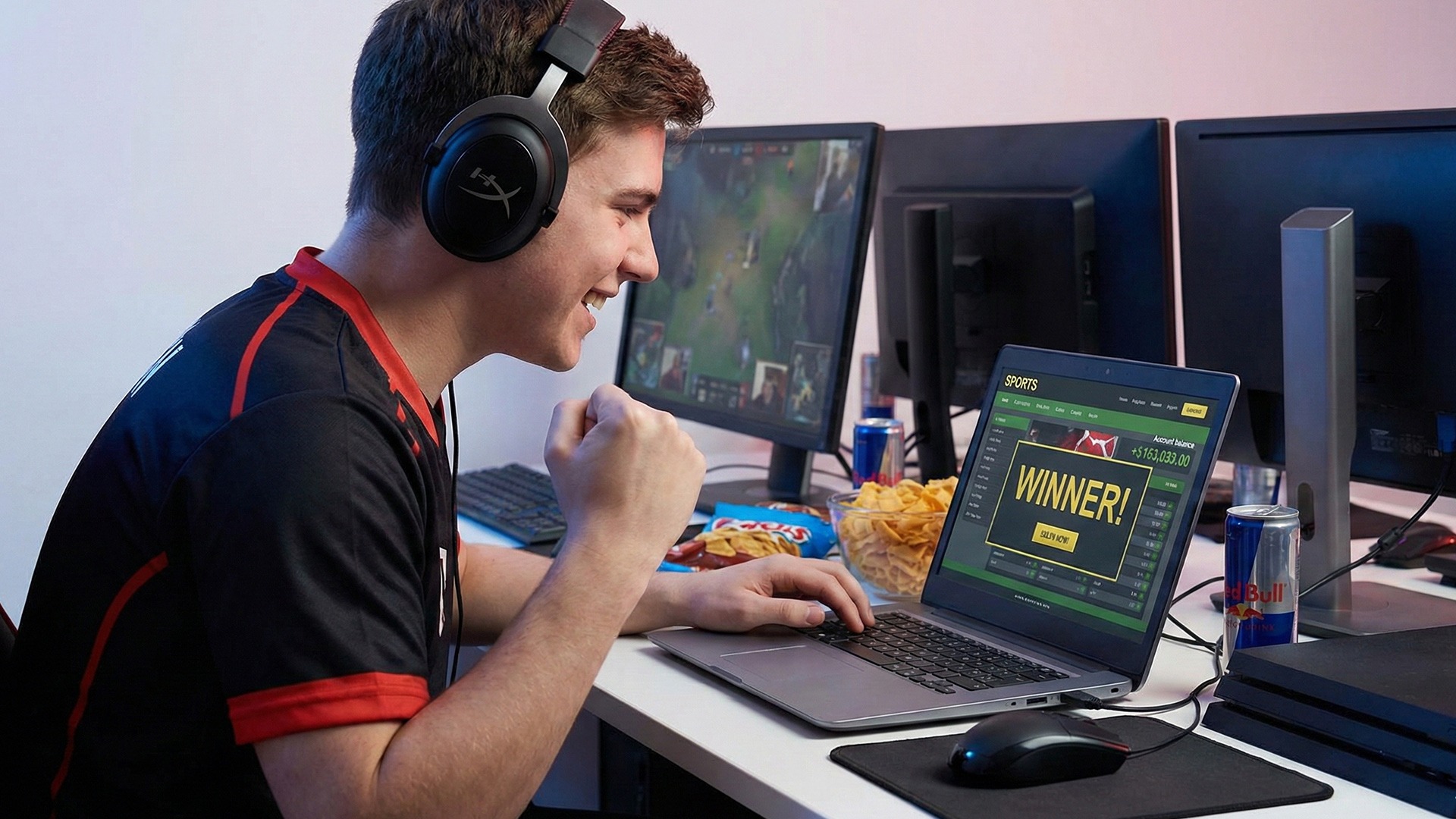
There’s a reason so many esports pros and competitive gamers make killer sports predictions—and it’s not just because they watch a lot of games. The skills that separate a Diamond-ranked player from a hardstuck Gold have more in common with successful sports forecasting than most people realize.
If you’ve ever grinded through ranked matches, optimized a build, or analyzed VODs to improve your gameplay, you already have the foundation for making smarter sports picks. The problem? Most people throw all that discipline out the window the moment they start making predictions.


Let’s fix that.
The Ranked Mindset vs. The Casual Trap
Here’s the thing about competitive gaming: nobody who takes it seriously expects to win every match. You accept that losses are data points. You review what went wrong, adjust your approach, and queue up again. The goal isn’t perfection—it’s improvement over time.
Now think about how most people approach sports predictions. They make an emotional pick based on their favorite team, it doesn’t hit, and they immediately double down on the next game trying to “make it back.” Sound familiar? That’s tilt—and gamers know tilt destroys winrates faster than anything else.
The solution is treating sports predictions like you’d treat a ranked climb. Track your picks. Analyze your misses. Look for patterns. Did you overvalue home-field advantage? Underestimate injury impacts? The answers are in the data, but only if you’re actually collecting it.
Why Process Beats Prediction
Every serious gamer knows that focusing on outcomes instead of process is a recipe for frustration. You can play the fight perfectly and still lose to a lucky crit. You can make the right rotation and still get inted by a teammate.
Sports work the same way. A basketball team can shoot 45% from three all season and still go cold in the fourth quarter of a playoff game. A pitcher with elite stuff can get shelled because sometimes the ball just finds holes.
This is why the best sports predictors focus on process, not results. Instead of asking “Did I win that pick?” they ask “Was my reasoning sound? Did I account for the relevant factors? Would I make the same pick again with the same information?”
This shift in thinking is what platforms like HotTakes are built around. As a free-to-play sports simulator, it lets you practice making picks without any financial pressure—essentially paper trading for sports predictions. You can test your theories, track your performance, and figure out what you’re actually good at predicting before anything meaningful is on the line.
The Social Edge: Why Community Matters
Here’s something the gaming community figured out years ago: you improve faster when you’re part of a community. Discord servers, coaching sessions, and even just spectating better players accelerates learning in ways that solo grinding never can.
The same applies to sports predictions. When you can see what your friends are picking in real-time, follow sharp predictors, and discuss the reasoning behind different takes, you’re getting access to perspectives you’d never develop on your own.
This social sports game element is why prediction apps are exploding in popularity. It’s not just about competing with friends—though that’s definitely part of the appeal. It’s about learning from a community of people who are all trying to get better at the same thing. You can bet with friends, compare strategies, and even tail the picks of consistently successful players to understand their approach.
Building Your Prediction Meta
In competitive games, understanding the meta is essential. You need to know what strategies are working, what’s being exploited, and what counters are available. The same framework applies to sports predictions.
Here’s how to build yours:
Start with what you know. If you’ve watched every Lakers game this season, you probably have insights that the average person doesn’t. Maybe you’ve noticed that their bench unit has been quietly dominant, or that their star player tends to coast in the first half of back-to-backs. This edge exists in every sport—the question is whether you’re paying attention.
Track everything. Serious gamers track their stats religiously. Your sports predictor app should do the same. Keep records of every pick you make, including your reasoning at the time. After a few weeks, patterns will emerge. Maybe you’re great at calling totals but terrible at spreads. Maybe you crush NFL picks but whiff on NBA. Data reveals the truth.
Test before you commit. This is where a free betting simulator becomes invaluable. Before you’re confident in a new strategy, test it in a low-stakes environment. Did your “always fade teams on the second night of a back-to-back” theory actually hold up over 50 picks? Find out without risking anything.
Iterate constantly. The meta shifts in games, and it shifts in sports too. Teams get healthier, coaching adjustments happen mid-season, and public perception creates line movement. What worked in October might not work in March.

The Discipline Difference
Here’s the uncomfortable truth: most people who fail at sports predictions don’t fail because they lack knowledge. They fail because they lack discipline.
They chase losses. They bet on their favorite team even when the line doesn’t make sense. They ignore their own data when it tells them something they don’t want to hear. They treat predictions like entertainment instead of a skill to be developed.
Gamers who’ve put serious time into competitive titles know that discipline is the separator. It’s the difference between playing to have fun and playing to improve. Both are valid—but they require different approaches.
If you want to actually get good at sports predictions, you need to treat it like you’d treat climbing to a new rank. Accept that you’ll lose along the way. Focus on making good decisions rather than getting good outcomes. Build systems that remove emotion from the equation.
And most importantly? Practice. A lot. Platforms offering free sports picks and prediction challenges let you get hundreds of reps in without any downside. The more picks you make, the more data you collect, the faster you’ll figure out where your actual edge is.
Ready to Start Your Climb?
The skills that make someone good at competitive games—analytical thinking, pattern recognition, emotional discipline, continuous improvement—are exactly the skills that make someone good at sports predictions. The difference is that most people never apply them.
If you’re a gamer looking to put your analytical brain to work in a new arena, sports prediction offers a surprisingly deep metagame. Start tracking your picks, find a community to learn with, and focus on process over results.
The climb is the same. Only the game has changed.