
The Badlands biome is one of Minecraft’s most visually striking and resource-rich environments, instantly recognizable by its towering terracotta formations and vivid color palettes. Whether you’re spawning into a new world or seeking out a badlands biome specifically, understanding how to navigate, survive, and build in this unique terrain can make the difference between a thriving settlement and a frustrating respawn. This guide covers everything you need to know about badlands minecraft exploration, from the distinctive geological features to advanced mining strategies and aesthetic building techniques that actually look good in the environment.
Key Takeaways
- Badlands minecraft biomes feature distinctive colored terracotta formations, extreme vertical terrain, and abundant gold ore concentrated between Y-levels 0–79, making them ideal for resource farming and strategic mining operations.
- Survival in Badlands requires importing food animals, establishing water sources from underground caves, and building on natural plateaus that provide defensible positions and minimal mob threats.
- The biome’s warm earth-toned palette naturally suits Western, Southwestern, and Ancestral Puebloan-inspired architecture, allowing builders to create visually striking settlements that complement existing terracotta colors without excessive terraforming.
- Combat in Badlands demands respect for vertical terrain, with strategic positioning on elevated plateaus, adequate lighting to prevent mob spawning, and controlled access points to defend your base effectively.
- Nether portal travel systems provide the fastest navigation solution for traversing large Badlands areas, reducing travel time by eight times compared to walking on the chaotic terrain.
- Early-game survival priorities include locating cave overhangs for immediate shelter, mining exposed cliff-face stone for tools, and securing a water bucket before nightfall to handle both hydration and hazardous falls.
What Are Badlands Biomes And Why They Matter
Unique Characteristics And Terrain Features
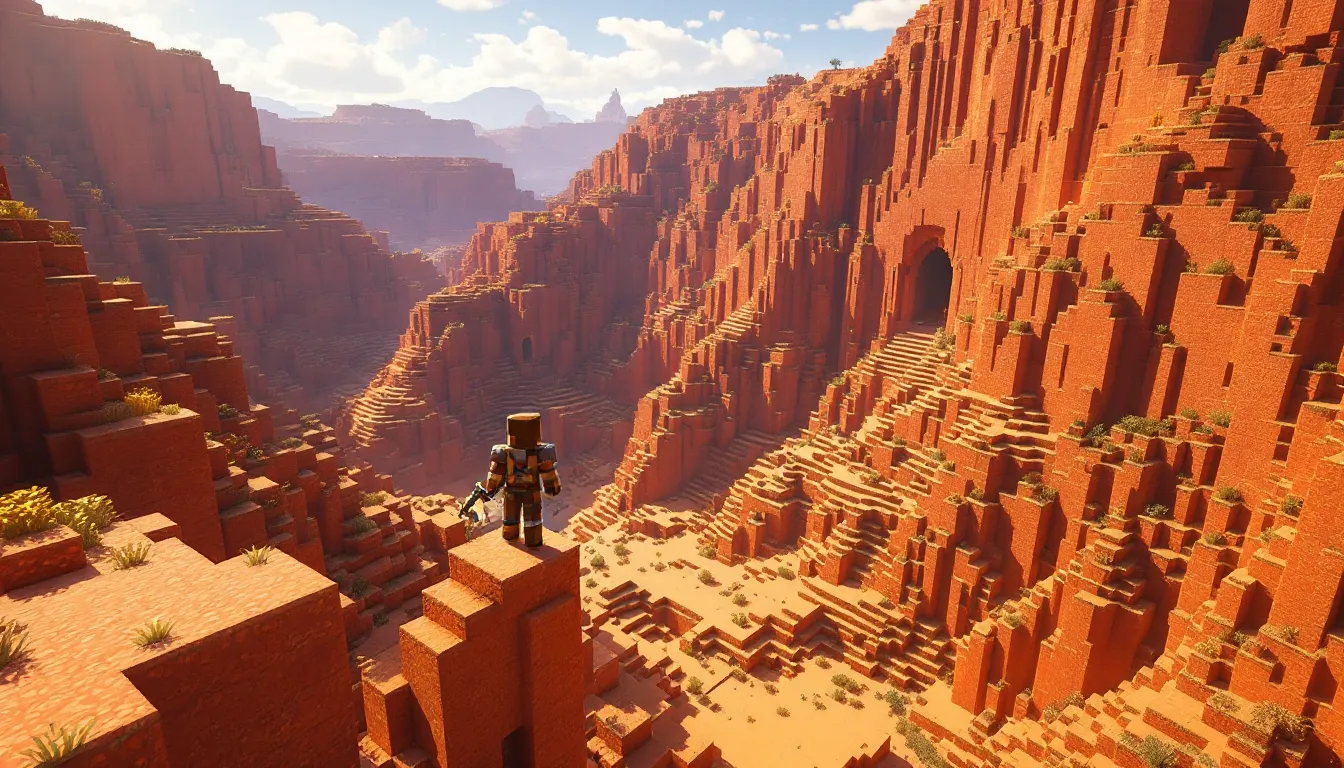
The Badlands biome stands out immediately because of its lack of grass blocks and preponderance of terracotta. You’ll find stacks of hardened clay and colored terracotta ranging from orange, red, yellow, brown, and white, basically nature’s palette decided to show off. The terrain is extremely uneven, with deep ravines, towering mesas, and massive elevation changes that can go from sea level to over 200 blocks high in moments. It’s visually dramatic and structurally chaotic, which makes it both appealing and challenging.


Unlike forests or plains biomes, the Badlands offer minimal vegetation. You won’t find much grass, trees, or traditional water sources, which immediately signals that survival strategies need adjustment. Hostile mobs spawn at night just like anywhere else, but the terrain’s complexity creates unique cover and navigation challenges. The extreme terrain variation also creates natural amphitheaters and overhangs that provide shelter without building, a huge advantage early game.
Another key feature: Badlands can generate underground caves and mineshafts, sometimes creating spectacular exposed cave entrances carved into the cliff faces. These aren’t unique to Badlands alone, but when they appear here, they’re visually magnificent and often easier to navigate given the surrounding visibility.
Where To Find Badlands Biomes
Badlands biomes don’t spawn at ground zero (0, 0), but they appear fairly regularly in most generated worlds. The easiest method is using /locate biome badlands in Java Edition or locating them manually by exploring. In Bedrock Edition, the command varies slightly: /locate biome minecraft:badlands. If you prefer old-school exploration, flying or traveling in a straight line for several thousand blocks typically leads to one eventually.
You might also encounter Eroded Badlands or Wooded Badlands, which are variants with slightly different characteristics. Wooded Badlands have the same colorful terrain but include oak trees scattered throughout, providing wood without hunting elsewhere. These variants add variety to world generation and influence your settlement strategy. Exploring the Exciting Features discusses terrain generation changes that also affected Badlands composition in recent versions.
World generation has evolved significantly, so checking your game version matters. Badlands generation differs between Java 1.17+, Bedrock, and older snapshots. If you’re setting up a serious base here, confirm your world type and update level first.
Terrain Generation And Geography
Altitude Variations And Plateaus
Badlands terrain isn’t random, it follows distinct patterns of high plateaus and deep erosion channels. You’ll spot flat-topped mesas that form natural bases for builds, elevated at 100+ blocks high. The sheer cliff faces of these plateaus can reach 60+ blocks vertically, giving you incredible vantage points and fortress-like defensive positions. But, climbing down requires careful navigation or significant time investment.
The erosion channels between plateaus create river-like features without water, leaving you with sandy or clay-based ravines. These gorges are navigable paths through the biome and naturally funnel travel routes. If you’re planning a large base, positioning near one of these channels lets you establish a central hub with easy access to multiple elevation levels.
Speaking of elevation, the altitude range in Badlands can exceed any other biome. You might enter the Badlands at Y-level 60 and spot peaks at Y-level 200+ and valleys at Y-level 20-30. This verticality affects mining strategy significantly: ore distribution changes by altitude, cave systems connect across multiple layers, and if you’re building upward, you’re looking at tall construction projects.
Color Patterns And Aesthetic Appeal
The colored terracotta blocks are the star feature. Natural generation includes orange, red, yellow, brown, gray, white, and light gray terracotta in specific patterns. These aren’t random, generation follows a kind of striped or banded pattern, often with orange dominating lower elevations and lighter colors higher up. This natural color gradient is why Badlands builds can look phenomenal with minimal additional terraforming.
The aesthetic appeal has made Badlands a favorite for themed builds. The warm earth tones complement ranch-style buildings, Native American-inspired architecture, Old West settlements, or any build prioritizing warmth and earthy vibes. When designing structures, these colors are already your foundation. Adding wood accents and contrasting materials (like dark wood doors or stone bricks) makes builds pop without clashing.
Color coordination is crucial here, mismatched block choices stand out badly against the natural gradient. We’ll dive deeper into this in the building section, but recognizing that the biome’s existing palette should guide your choices prevents aesthetic disasters. Top Minecraft Shaders for 1.17.2 enhance the visual impact of these colors if you’re running shader mods, turning the Badlands into an even more dramatic landscape.
Resources And Mining Opportunities
Gold And Ore Deposits
The Badlands is famous for one reason above all others: gold ore. This biome has significantly higher gold ore concentration than other biomes, making it the premier gold farming location in survival mode. You’ll find gold ore at almost any altitude, but the highest concentration appears between Y-level 0 and Y-level 79. If gold is your goal, Badlands is the answer.
Beyond gold, standard ore distribution applies. Iron ore, coal, copper, lapis lazuli, and diamonds all appear in normal quantities. The advantage is that you’re often mining exposed faces of cliffs, meaning you don’t need to spend time creating horizontal or vertical mine shafts. Exposed ore on cliff walls is often visible from a distance, letting you identify rich mining areas before committing effort.
Mineral clusters were introduced in Java 1.17+, and they affect Badlands too. You’ll encounter large ore clusters of deepslate copper and raw iron, making mining more efficient when you hit the right vein. Bring a pickaxe rated for the ore type, copper needs stone or better, diamonds need an iron or diamond pickaxe, and you’re golden (pun intended).
Quick mining checklist for Badlands:
- Bring an iron pickaxe minimum
- Prioritize Y-level 0-79 for gold
- Watch for exposed ore on cliff faces
- Bring food, you’ll mine longer than expected
- Mark high-yield areas with torches or blocks
Unique Materials And Blocks
The terracotta blocks themselves are the primary unique resource. You can harvest these with any tool or your hand, though a pickaxe speeds it up. The natural color variety means you don’t need dye to create colored terracotta, it’s already there. This is invaluable for large builds requiring volume and color variation.
Stained hardened clay appears in various colors naturally, essentially giving you a free palette of 16 colors pre-placed. If you’re building something massive, harvesting and relocating these blocks is more efficient than crafting from scratch. The trade-off is time investment in collection versus material cost in crafting.
You’ll also find white concrete generated naturally in some Badlands variants, particularly near erosion channels. This block is harder to farm elsewhere, so Badlands offers a straightforward source. Gold ore itself, while technically not unique to Badlands, is so abundant here that it functions as a signature resource.
Caves within Badlands sometimes contain lush caves, which introduce moss blocks and cave vines. These verdant areas provide plants and food (sweet berries) in an otherwise desolate biome, creating small oases of vegetation. These caves are valuable for early-game survival and aesthetic building material contrast. Learning to Make Amazing Things in Minecraft covers crafting and resource gathering fundamentals applicable here.
Survival Strategies In Badlands Biomes
Building Shelter And Finding Safety
The Badlands presents immediate shelter challenges because there’s no dirt to farm, limited wood, and existing terrain that’s mostly vertical cliffs or deep gaps. Your first night requires action. Unlike forest or plains spawns, you can’t quickly gather wood and build a basic shelter by nightfall.
Immediate first-night strategy:
- Locate a cave entrance or overhang
- Gather stone (easy, mine exposed walls)
- Build a small stone enclosure or seal a cave opening
- Wait out mobs indoors with a door
- Start mining once you have tools
If you spawn at a plateau top, dig down three blocks, cover with a door or slabs, and you have adequate shelter. The exposed cliff faces provide ready-made cover, seal an overhang with a few blocks, and you have a base. This terrain advantage beats starting in a flat, tree-less desert.
Once established, building on a plateau provides natural walls and defense. Hostile mobs have harder time reaching you on a 80+ block high mesa, and you control the only access point. This is why Badlands settlements often dominate their plateaus entirely, it’s defensible and visually impressive.
Water is rare naturally, so creating a water source early is critical. Buckets of water don’t spawn naturally here, so you’ll need to find water from a cave system, then haul buckets back. Alternatively, locate a seed that places a Badlands biome near water for easier access. For long-term bases, build water channels or wells by digging down to reach water tables (typically around Y-level 40-60).
Food And Water Management
Without grass, passive mobs are absent naturally. This means no natural chicken, cow, sheep, or pig spawning in the biome. You’ll need to bring animals with you or breed them after transport. This is a significant survival consideration, hunting local mobs for drops isn’t viable. Plan ahead by bringing animals early or setting up a dedicated farm in another biome.
Water sources are sparse but findable. Caves and underground systems almost always contain water somewhere. Digging down methodically reveals water at deeper levels. Once found, construct buckets and establish a water supply for drinking (if on Hardcore or difficulty 2+), crops, and utilities.
Food production in Badlands:
- Import animals (cows, chickens, sheep) early
- Establish a farm using imported dirt or moss
- Farm crops: wheat, carrots, potatoes, beetroot
- Hunt mobs at night for drops
- Fishing provides steady food if water is accessible
Building an indoor farm under a sky farm light source is your best bet. Bring dirt or construct moss farms using lush caves if available. The biome’s lack of natural farm space means intentional construction is mandatory. This isn’t a place to rely on surface hunting, you need infrastructure from the start.
Building And Designing In Badlands
Architectural Styles That Complement The Environment
The Badlands’ warm, earthy palette naturally suits specific architecture. Western/Old West themes feel at home here, wooden saloons, ranch-style buildings, and rustic structures leverage the natural terracotta base perfectly. The existing colors provide historical authenticity without extra terraforming. Another strong fit is Southwestern architecture: adobe-style buildings, pueblo-inspired structures, and earthy simplicity.
Native American-inspired architecture also resonates thematically. Cliff dwellings carved into the mesa faces mirror real-world Ancestral Puebloan architecture, creating immersive builds that fit the landscape naturally. Many players use the Badlands for exact recreations of structures like Mesa Verde.
Avoid high-contrast, purely modern builds in Badlands unless contrast is intentional. Neon blocks, bright primary colors, and overly clean geometric structures clash with the warm, chaotic terrain. If you’re building something modern, use that contrast deliberately, a glass-and-steel outpost against orange cliffs can look striking, but accidentally mixing blue and orange is visually jarring.
Building style checklist:
- Use warm wood (oak, dark oak, crimson wood)
- Incorporate natural terracotta heavily
- Add stone variants (stone bricks, deepslate) for contrast
- Use earth-toned concrete if needed (avoid bright colors)
- Leverage natural elevation for structure placement
Color Coordination And Aesthetic Layouts
Successful Badlands builds respect the existing color palette. The biome naturally provides orange, red, yellow, and brown: adding light wood (oak) and dark wood (dark oak or charcoal) accents enhances this. Avoid bright green, sky blue, or neon colors unless building a strong contrast piece.
Terracotta is your friend, use it as your primary building block. The natural banding and color variation already provide visual interest, so minimal additional terraforming is needed. If you need a specific color terracotta doesn’t provide, concrete or concrete powder in matching earth tones works. White and gray concrete fit well without jarring contrast.
Plateau settlements should emphasize the elevation advantage. Build tall structures that dominate the landscape, create terraced levels using natural step-downs, and use the cliff faces as walls. This approach maximizes the terrain’s unique features rather than fighting them.
ForBuilding in canyons and erosion channels, create bridges between plateaus or settlements that cling to cliff faces. These dramatic placements look better than isolated flat builds on the ground. Use scaffolding or stairs to create accessible pathways, turning navigation challenges into design features.
Minecraft BSL Shaders 1.17: How to Download provides enhanced visuals that make color coordination and build aesthetics pop. If you’re serious about Badlands builds, shader mods elevate the visual impact of your color choices significantly. The warm terracotta tones especially benefit from shader lighting and depth effects.
Lighting is crucial in Badlands builds. Lanterns, soul lanterns, campfires, and candles in warm colors enhance the aesthetic. Avoid cold-toned light sources (blue) unless you’re deliberately creating contrast. Integrated lighting into your structures, lanterns on posts, soul lanterns in windows, completes the theme.
Mobs And Hostile Encounters
Common Hostile Mobs In Badlands
Hostile mob spawning in Badlands follows standard rules: darkness or low light levels below difficulty 1. The biome’s caves and overhangs create natural dark zones, so mobs spawn regularly. You won’t encounter biome-specific hostile mobs, creepers, zombies, spiders, and skeletons appear as normal. The difference lies in terrain advantage.
The vertical landscape creates unique mob behavior. Spiders can climb cliff faces, giving them mobility that feels overpowered in narrow canyons. Creepers are deadly near your builds because they can approach from unexpected angles on vertical terrain. Skeletons on plateaus above you have sightline advantage, making rooftop combat more dangerous. Zombie hordes in canyons at night are genuinely threatening because the narrow spaces limit escape routes.
Endermen can teleport around freely, and the Badlands’ chaotic terrain makes tracking them harder. If you’re not careful about water buckets for protection, an Enderman encounter can escalate quickly. Witches spawning in caves are standard annoying encounters, they drink healing potions, making them tedious to kill.
Mob threat assessment:
- Spiders: High threat on vertical terrain
- Creepers: Highest threat near valuable builds
- Skeletons: High threat from elevation advantage
- Zombies: Moderate threat in swarms
- Witches: Annoying, not dangerous
- Endermen: Unpredictable, moderate threat
Defense And Combat Strategies
The first defense is light. Torches, lanterns, and other light sources prevent mob spawning nearby. Light your base perimeter aggressively, every dark corner is a potential spawn point. On plateau settlements, lighting the cliff base and surrounding area prevents surprise encounters.
Physical barriers work well here. Walls with doors and gates funnel hostile mobs, letting you control engagement. A 2-block-high wall stops zombies from jumping over: a 3-block wall stops most mobs. For serious defense, create a perimeter 20+ blocks out from your structures, then gate access points.
Ranged combat advantages belong to players with higher ground. If mobs approach from below your plateau, you have the sightline advantage. Build arrow slits or ramparts for archers. Bows from elevated positions are devastating against ground-level threats. This is why mesa-top bases are so defensively strong, you control every angle.
For cave systems and underground bases, creating kill chambers prevents endless mob waves. A long drop (25+ blocks) onto a hopper collection system kills mobs while harvesting drops. Alternatively, water push-through systems funnel mobs into one-shot kill zones. These are construction-heavy but invaluable for long-term mining operations.
Quick defense priorities:
- Light your immediate base area completely
- Build walls with controlled access points
- Create elevated positions for ranged defense
- Set up kill chambers for farm mobs
- Keep water buckets for Enderman situations
In combat, the vertical terrain is a double-edged sword. While you gain tactical advantage on high ground, uncontrolled falls are deadly. Sprint-jumping and water bucket placements are essential skills. Fall damage can exceed your health quickly on 80+ block drops, so practice water-bucket landing or avoid running near edges during combat.
Advanced Tips For Badlands Exploration
Cave Systems And Underground Navigation
Cave systems in Badlands are spectacular and complicated. The exposed nature of the biome means many caves open directly on cliff faces, giving you immediate access without digging. The trade-off is that cave entrances are often precarious, falling while entering is a real risk. Approach exposed cave entrances carefully, use water buckets, or build temporary scaffolding for safe descent.
Once underground, Badlands caves follow standard generation rules but can be massive. The terrain’s steep elevation changes mean caves may span Y-levels 0-200, creating vertically complex systems. You might enter at Y-level 100, fall through connected caverns, and end up deep in the system with no clear exit. Torches and careful navigation are essential.
Bringing basic supplies is critical: torches (minimum 64), food, water buckets, a pickaxe, a sword, and armor. Optionally, bring a crafting table and furnace for emergency needs. If exploring a large system, mark your path back using distinctive torch patterns, torches on the right side of blocks on the path out, for example. This prevents the disorientation that claims resources and lives.
Underground navigation checklist:
- Place torches consistently
- Bring backup supplies
- Mark alternate exits
- Map complex systems mentally
- Avoid exploring at low health
- Bring water buckets for safe drops
Ore availability underground:
- Y-level 0-20: Diamonds, deepslate ores
- Y-level 20-50: Lapis lazuli, copper
- Y-level 50-79: Gold (abundant), iron
- Y-level 79+: Coal, surface cave systems
For serious mining operations, create a dedicated mining base inside a cave system. Setting up a central hub with tunnels radiating outward lets you work efficiently without constant surface travel. This base needs beds for respawning, furnaces for smelting, and storage for inventory.
Fast Travel And Navigation Methods
Badlands biomes are geographically large and traversal is slow due to terrain. Creating fast travel systems is almost mandatory for convenience. Nether travel is the standard solution, a Nether portal in your base connects to a hub in the Nether, then to secondary destinations. Nether travel covers 8x the distance in the same time, so a long Badlands journey takes minutes instead of hours.
Alternatively, create minecart railways on level terrain or connecting plateaus. The challenge is finding level terrain, Badlands’ vertical nature means most surfaces aren’t suitable. If you find a long, flat erosion channel, a minecart line cuts travel time dramatically.
Water slides from high points create fast descents, though damage depends on fall height and whether you’re taking damage. A water slide from a 100+ block plateau without landing damage requires careful slope design and landing pool depth. For casual travel, they’re more fun than efficient. Riptide tridents with water work similarly and are faster in the right conditions.
Local teleportation using Ender pearls is costly (require Endermen farming) but instantly bridges distances. A group of players can optimize pearl-farming for convenient teleport networks, though this requires planning and resource investment.
Download Minecraft 26.0 / 1.26.0 ensures you have the latest version with potential travel optimizations and features. Version differences can affect path-finding and terrain generation, so staying current matters for technical builds and travel systems.
Fast travel options ranked by convenience:
- Nether portal: 8x travel speed, most reliable
- Minecart railways: Fast local travel, requires flat terrain
- Water slides: Fun but damage-prone
- Ender pearl teleport: Expensive, instant range-limited travel
- Walking: Slowest, but doesn’t require infrastructure
Most serious Badlands players combine methods: Nether portal for long distances, local minecart or foot travel for short distances. This hybrid approach balances convenience and resource cost.
Conclusion
The Badlands biome is simultaneously one of Minecraft’s most challenging and rewarding environments. The lack of vegetation, extreme terrain, and resource scarcity create real survival pressure, yet the abundant gold, unique aesthetics, and naturally defended terrain make it worth the effort. Your approach determines success: plan for food and water sources, respect the vertical landscape’s dangers, and leverage the natural architecture for defensible builds.
Players settling in Badlands typically never leave, the resource advantages, visual appeal, and engineering challenges make it oddly addictive. Whether you’re mining gold for industrial progression, building an epic Western settlement, or simply experimenting with vertical architecture, the Badlands demands intentional planning and rewards clear execution.
Start small with a safe perimeter base, establish reliable food and water sources, then expand outward. The biome’s chaotic terrain becomes familiar, hidden caves reveal themselves, and your settlement grows. After weeks of Badlands gameplay, the orange cliffs feel like home, and no other biome quite matches the combination of danger and visual drama that makes exploration genuinely exciting.