

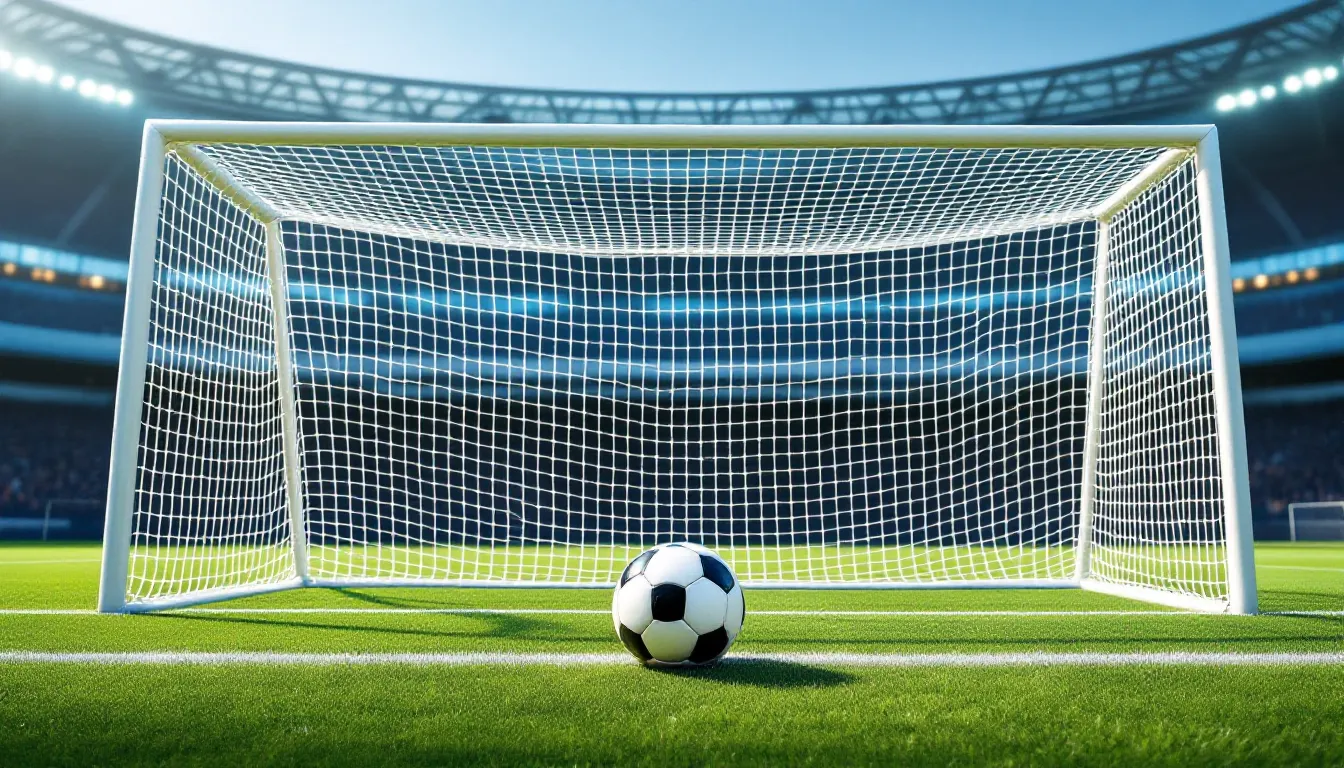
If you’ve ever wondered why professional soccer goals look so massive compared to the ones at your local park, you’re not alone. FIFA regulations don’t mess around when it comes to goal dimensions, and for good reason. The official soccer goal size is precisely defined, and these measurements matter far more than most casual fans realize. Whether you’re setting up for a pickup game, managing a competitive league, or just curious about how the sport’s fundamentals work, understanding the exact FIFA soccer goal size specifications is essential. The standardized dimensions ensure fairness across every level of play, from youth leagues to the World Cup, and any deviation can actually affect how the game is played. In this guide, we’ll break down the official measurements, explore why these rules exist, and clarify some common misconceptions that surround goal specifications.
Key Takeaways
- FIFA regulation soccer goal size is standardized at exactly 24 feet wide by 8 feet tall (7.32 × 2.44 meters) across all professional and official matches worldwide.
- The standardized 24×8 dimensions have remained unchanged since 1875, creating a proven balance that affects game strategy, player development, and competitive fairness across every level of play.
- Youth soccer uses scaled goal sizes based on age groups, ranging from 12×6 feet for Under-6/7 players to the full professional dimensions for Under-12 and above.
- Strict goal size regulations ensure competitive fairness, enable goal-line technology and VAR systems to function accurately, and prevent wealthy federations from gaining unfair home-field advantages.
- Modern soccer technology like Hawk-Eye and VAR systems depend on exact FIFA soccer goal size specifications, with innovations layering onto the standardized dimensions rather than replacing them.
- Common misconceptions claiming goals have changed size for higher scoring or that professional goals differ from amateur ones are false—the FIFA standard applies universally across all sanctioned competition levels.
What Are the Official FIFA Soccer Goal Dimensions?
Width and Height Standards
The official FIFA soccer goal is 24 feet wide and 8 feet tall (7.32 meters × 2.44 meters). These measurements are non-negotiable for any match sanctioned by FIFA or its affiliated organizations. The width extends the full length of the goal line, providing a specific target area that defines what counts as a goal. The height measures from the ground to the bottom of the crossbar, the horizontal beam connecting the two uprights.


These dimensions create a total goal area of 192 square feet, which balances the challenge for attackers and defenders. A goal that’s too small becomes nearly impossible to score in: too large, and defending becomes nearly impossible. The 8-foot height is tall enough that most shots must be placed with precision, but low enough that a keeper can theoretically reach the corners.
The goal frame itself must be made from approved materials, typically white paint-finished metal or aluminum, and the uprights (called posts) must be circular or square, with a maximum diameter or width of 5 inches. The crossbar sits exactly 8 feet above the ground, creating that iconic rectangular frame you see in every professional match.
Depth and Construction Requirements
The depth of the goal extends 8 yards (7.32 meters) from the goal line, though this measurement applies to the goal area marking on the field rather than the goal structure itself. The actual goal frame itself doesn’t have significant depth, it’s essentially flat against the goal line. But, the netting behind the goal typically extends 3-4 feet back to catch shots and create a defined space.
The netting is a critical component. It must be made of white cord or twine, with a mesh size that prevents the ball from passing through (standard FIFA regulation balls must not fit through the net openings). The netting is attached to the goal frame and can extend several feet behind to create depth for visual confirmation of goals. Some modern setups feature deeper netting for professional broadcasts, but the minimum standard is functional, just enough to catch the ball.
Construction must meet FIFA Quality Approval standards, meaning the goals undergo testing for stability and durability. The frame must be securely anchored to prevent tipping or movement during play. Professional installations use ground-level anchoring systems, typically metal spikes or bolts driven into the pitch. Portable goals used in youth or amateur settings require weighted bases or similar stabilization methods to meet safety standards.
Historical Evolution of Goal Size Rules
Early Football and Goal Development
When football (soccer) first codified its rules in 1863, goal dimensions weren’t actually specified in precise measurements. Early matches used whatever natural features existed, often marked by jackets or hats on the ground. The concept of a standardized goal didn’t exist: players just agreed on a general area before kickoff.
By the 1870s, crossbars became common, but even then, heights and widths varied wildly between regions and clubs. Some goals were 12 feet wide, others 20 feet. Height fluctuated even more, there was no consensus until much later. The earliest attempts at standardization in England suggested goals around 24 feet wide, but it wasn’t mandatory.
The English Football Association first proposed standardized dimensions in 1875, settling on 24 feet wide and 8 feet high. This wasn’t immediately adopted everywhere, and international play created confusion. Different countries used slightly different measurements, which complicated international fixtures. By the 1880s, most European leagues had adopted the 24×8 standard, largely due to English football’s dominance and the natural spread of their rule book.
Modern Standardization and Changes
FIFA’s founding in 1904 brought the first truly international standardization effort. The 24×8 goal size was formally adopted as the official standard and hasn’t changed since. This consistency, over 120 years of the same dimensions, is remarkable in professional sports. While almost every other rule has been tweaked, adjusted, or modernized, the physical goal size has remained untouched.
The reason is simple: the 24×8 measurement works. It creates a balance that’s been proven across centuries of play and millions of matches. If FIFA changed goal size significantly, it would fundamentally alter how the game is played, how players are trained, and how tactics develop. A wider goal would create chaos in defensive strategy: a taller one would devalue strikers’ heading ability.
What has changed is the technology around goals. Modern FIFA-approved goals use precision engineering, synthetic netting materials, and advanced anchoring systems. Video assistant referee (VAR) technology has been integrated to catch goal-line decisions, but the goal itself remains the same rectangle it’s been since 1875. Some proposals over the years have suggested making goals slightly larger to encourage more scoring, but FIFA has consistently rejected these changes, recognizing that the sport’s balance depends on those exact measurements.
Why FIFA Maintains Strict Goal Size Regulations
Competitive Fairness and Game Integrity
Competitive fairness is the foundation of FIFA’s regulations. If teams could use different goal sizes, the sport would become absurd. Imagine a scenario where Team A plays on a field with a 26-foot-wide goal while Team B defends a 22-foot goal. One team has an inherent advantage before the match even starts. This isn’t fairness, it’s chaos.
The strict 24×8 standard ensures that every team, at every level, faces the exact same target. When a striker takes a shot, they’re aiming at the same dimensions whether they’re playing in a professional league or a youth tournament. This consistency allows players to develop precise technique, coaches to design repeatable tactics, and competition to reward actual skill rather than equipment variables.
Goal-line technology integration depends on precise measurements. Modern VAR systems, including professional esports platforms and competitive gaming setups, rely on knowing exact field and goal dimensions to determine if the ball has crossed the line. If goals varied in size, these systems would fail. The standardized dimensions are baked into the software and hardware that supports the modern game.
Tournament integrity also depends on consistency. FIFA hosts the World Cup, continental championships, and other tournaments where teams from different regions compete. If regulations allowed variation, wealthy federations could build oversized goals at home while facing standard sizes away. The strict rule prevents this advantage-seeking behavior.
Player Safety Considerations
Player safety is secondary but important. The 8-foot height creates a specific collision risk profile. Defenders understand exactly how high they can safely challenge for headers: attackers know the precise distance they need to clear the crossbar. Goalkeepers train specifically for an 8-foot goal, positioning themselves accordingly and developing muscle memory for that exact geometry.
If goals were significantly taller, keepers would need different positioning strategies and more physical extension. Shorter goals would bunch defenders closer to the line. Either change would create unfamiliar collision dynamics and increase injury risk during the transition period. Consistency in dimensions means players can focus on technique and strategy rather than adapting to variable equipment.
The goal frame’s maximum diameter (5 inches) also serves safety. Larger uprights would increase concussion risk if a player collided with them at speed. The specification prevents equipment from becoming a hazard rather than just a target.
Different Goal Sizes Across Competition Levels
Youth and Amateur Leagues
Youth soccer doesn’t use the full 24×8 goal. FIFA recognizes that children can’t reasonably defend or attempt to score on a professional-sized goal, so scaled dimensions exist based on age groups:
- Under-6 and Under-7: 12 feet wide × 6 feet tall (3.66m × 1.83m)
- Under-8 and Under-9: 16 feet wide × 6 feet tall (4.88m × 1.83m)
- Under-10 and Under-11: 18 feet wide × 6 feet tall (5.49m × 1.83m)
- Under-12 and above: 24 feet wide × 8 feet tall (7.32m × 2.44m)
These scaled dimensions aren’t arbitrary. They’re designed so that younger players face proportional difficulty. A 6-year-old shooting at a 12×6 goal has roughly the same challenge-to-skill ratio as a 16-year-old shooting at 24×8. The progression develops proper technique without overwhelming young players.
Amateur leagues for adults often use the full 24×8 standard, though some recreational or indoor leagues may vary. Indoor soccer, futsal, and smaller-field variants use smaller goals, futsal goals are typically 3 meters wide and 2 meters tall. These variations are allowed because they’re distinct formats with their own rules, not deviations from soccer standards.
Professional and International Standards
All professional soccer uses the standard 24×8 goal. This applies across every tier: Premier League, MLS, La Liga, Champions League, World Cup, Olympics, and every official FIFA-sanctioned competition. There’s zero flexibility here. If a goal is even an inch too small or too large, the match isn’t valid under official rules.
Professional installations are meticulous about compliance. Goals are measured, verified, and certified before every match. The goal frames are regularly inspected for wear, and any damage that might affect dimensions triggers replacement. VAR systems in professional leagues verify goal-line calls using broadcast footage, but the baseline measurements are always 24×8.
International tournaments face the strictest scrutiny. FIFA sends equipment inspectors to verify every stadium’s goals meet specifications. World Cup venues undergo months of preparation, with goal installation overseen by FIFA representatives. The same applies to continental championships like the Euros or Copa América. This consistency across continents and regions ensures that when national teams compete, they’re operating on identical equipment.
Common Misconceptions About Soccer Goal Regulations
One widespread misconception is that goals have changed size over time to increase scoring. This is false. The 24×8 standard has remained unchanged since 1875. Scoring rates fluctuate due to tactical evolution, player athleticism improvements, training methodologies, and rule changes (like the backpass rule in 1992), not goal dimensions.
Another myth suggests that professional goals are slightly larger than amateur goals to make matches more entertaining. Not true. A FIFA-compliant goal is 24×8, period. There’s no professional version or amateur version. The only legitimate size variations occur in youth soccer using the scaled dimensions mentioned above.
Some people believe that soccer goals are intentionally smaller than hockey or lacrosse goals to make the sport harder. While this comparison is somewhat irrelevant, different sports have different dimensions by design, it reflects a misunderstanding. Soccer goal size isn’t “small”: it’s precisely calibrated for soccer. A hockey goal is different because hockey is played on ice with sticks and a puck: the dimensions reflect that sport’s specific mechanics.
A final misconception involves goal-line technology. Some believe that introducing VAR changed goal size requirements. It didn’t. Goal dimensions remained exactly the same: the technology simply added verification to determine whether a ball had crossed a goal line of fixed dimensions. The relationship is one of compatibility, not causation.
These misconceptions often spread through casual fan conversations or poorly researched articles. The reality is simpler and more elegant: FIFA set the standard in the 1870s, formalized it internationally in 1904, and recognized that the measurement works perfectly. Rather than tinkering with something that’s proven effective for over a century, the organization has left it alone.
The Impact of Goal Technology on Modern Soccer
Modern soccer has integrated technology around goals while maintaining strict dimensional standards. Goal-line technology is the primary innovation. Systems like Hawk-Eye (used in professional leagues including the Premier League) use multiple high-speed cameras positioned around the goal to track ball position and determine whether it has fully crossed the line. This technology operates on the assumption of exact 24×8 goals: any variation would break the system.
VAR (Video Assistant Referee) expanded beyond just goal-line calls. Referees now review footage to determine if goals should count, checking for handballs in the build-up, fouls, or offside positions. Again, this system works because goals are standardized. Esports competitive gaming setups and professional platforms have demonstrated how technology integration requires standardized equipment baselines: soccer’s integration of VAR is no different.
Smart goal systems are emerging in some amateur and youth leagues. These use sensor technology to detect ball contact and crossing, providing instant feedback without needing human officials. Advanced versions integrate with tracking systems to provide analytics on shot placement, keeper positioning, and scoring patterns. All of this technology depends on knowing exact goal dimensions.
Broadcast technology has also evolved around goal specifications. Modern stadiums have camera angles and graphics systems designed to showcase goals from specific angles. The standardized goal allows viewers to understand depth and positioning through consistent visual framing. This consistency has made soccer more watchable and analyzable.
Looking forward, there’s speculation about additional sensor integration, potential systems that could detect whether a keeper’s hands crossed the line (for controversial save situations), or technology that measures shot speed and trajectory for analytics. None of these innovations would require changing goal size: instead, they layer additional data collection onto the existing standard. The goal itself remains the physical constant around which modern soccer technology evolves.
One area worth noting: some proposals have suggested using technology to determine if goals should be larger to increase scoring entertainment value. Recent competitive gaming coverage from esports publications shows that competitive communities often resist equipment changes that significantly alter gameplay. Soccer’s resistance to goal-size changes reflects similar thinking, the sport’s strategic depth depends on the difficulty curve that 24×8 dimensions create. Technology complements this, rather than replacing it.
Conclusion
The FIFA soccer goal size of 24 feet wide and 8 feet tall isn’t arbitrary, it’s the product of over 150 years of standardization, testing, and proven balance. From youth leagues with scaled-down versions to the World Cup’s precisely measured stadiums, these dimensions create fairness, enable consistent skill development, and form the foundation for modern soccer technology.
Understanding goal regulations matters whether you’re a player developing technique, a coach designing tactics, a facility manager installing equipment, or simply a fan appreciating the sport’s precision. The standard hasn’t changed because it works, and that consistency is part of what makes soccer globally accessible and competitive.
If you’re setting up goals for any level of play, ensure compliance with these measurements. If you’re watching matches, recognizing the precision behind even the most basic equipment deepens your appreciation for how the sport operates at every level. Soccer’s simplicity, a ball, two goals, and a field, belies the careful standardization that makes it work. The goal, in its unchanging dimensions, is the physical anchor holding that system together.