
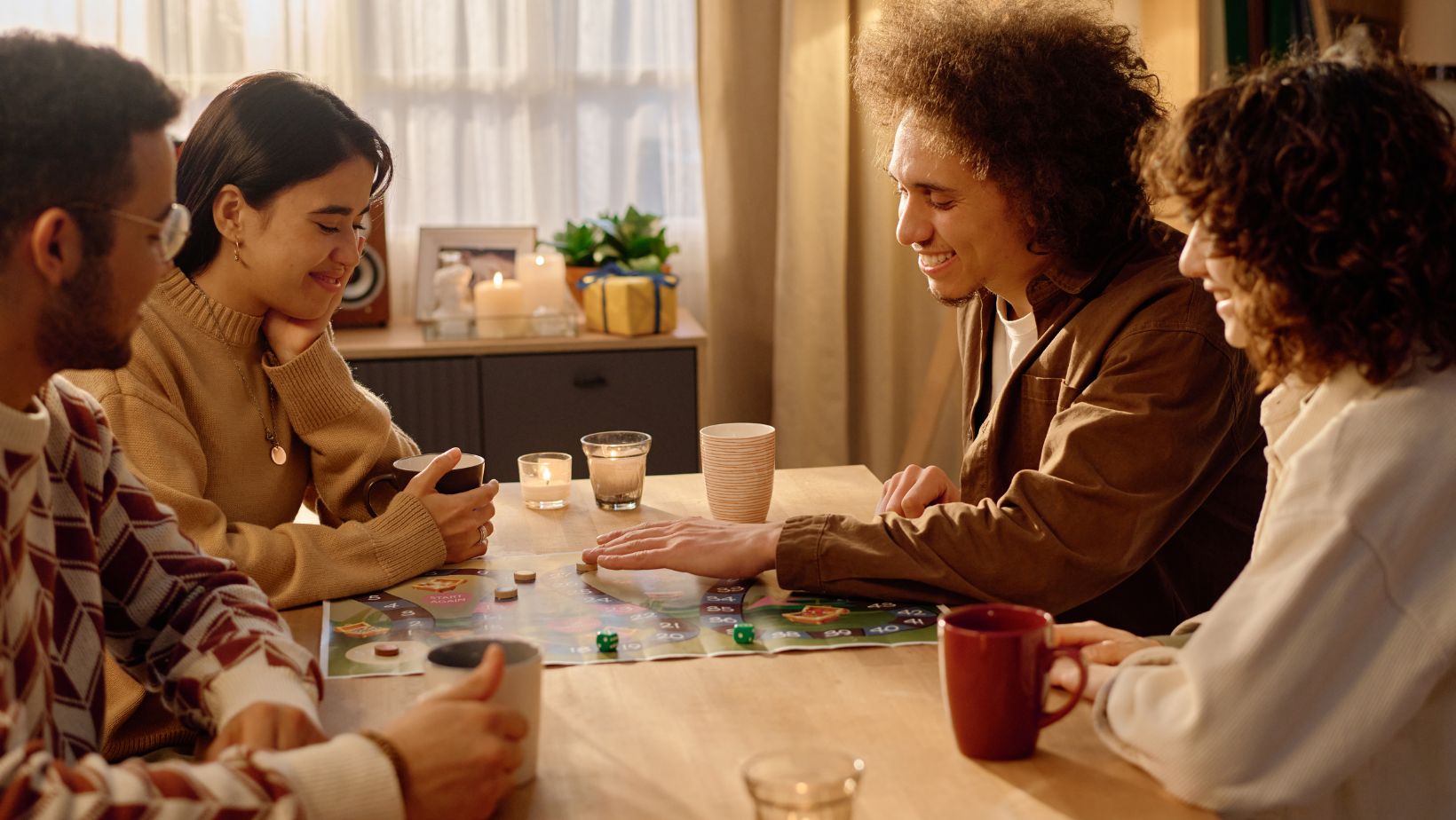
A table with just two, three, or four friends has its own quiet charm. It doesn’t have the wild noise of a big party game night, but it isn’t as intense as a one-on-one showdown either. It’s that comfortable middle ground: enough people to keep things lively, few enough that everyone’s involved in every moment. In a world full of quick digital distractions where someone might read more about fast-paced online entertainment, small-group board games offer something different: focused, face-to-face time that actually feels like hanging out.
When people ask for “the best” games, they often look for a ranked list of specific titles. But it’s more useful to think about types of games that naturally suit 2–4 players. Once you understand the patterns—how interaction changes with player count, how complexity feels at a small table—you can choose games that truly fit your friends and the mood you want.


Why 2–4 Players Is a Comfortable Sweet Spot
From a design viewpoint, 2–4 players is often a sweet spot because the game can stay personal without becoming overwhelming. Everyone gets turns frequently, and it’s easy to follow what’s happening around the table. You can actually track other people’s plans and adapt to them.
With fewer players, every move is more visible. Blocking a spot, taking a card, or triggering an effect has a direct impact on the others. That makes decisions feel meaningful, but without the chaos of eight opinions shouting at once. You get tension, but also space to joke, explain, and chat.
This group size also allows a little more complexity than big-group games. Rules can be richer, strategies a bit deeper, without the explanation phase turning into a lecture. You can still enjoy a relaxed evening, but with more substance than quick party fillers.
Two-Player Games: Intense but Friendly Duels
At two players, a game becomes almost conversational. Everything you do responds to one person, and everything they do responds to you. There’s no “third player problem,” no secret alliances—just a clean back-and-forth.
Analytically, strong two-player designs tend to offer:
- Clear information about the current state of play
- Direct interaction, where your choices affect the other person right away
- Streamlined rules that allow turns to move quickly
These games are great for close friends or partners who enjoy a focused, tactical experience. You see each other’s habits very clearly: who prefers bold moves, who likes patient buildup, who bluffs, who never does. That kind of honest, low-distraction interaction can be surprisingly bonding, especially when both people are okay with winning and losing.
Three Players: Small-Scale Politics and Balance
Three-player sessions sit in an interesting space. With an odd number, the social landscape changes. Temporary alliances and shifting targets appear naturally, even if the rules never mention them.
Games that work well at three usually:
- Make it costly to attack the same person repeatedly
- Include gentle catch-up mechanics so nobody is doomed early
- Create situations where helping one opponent might block another
This leads to small but rich moments of negotiation: “If I hit you this turn, they’ll win next round,” or “We both need to keep them in check.” For groups that enjoy talking through their thought process and reading each other’s intentions, three-player games can feel almost like a light strategy discussion disguised as entertainment.
The main risk is making one person feel ganged up on. Choosing games with shared threats, rotating pressure, or cooperative elements can soften that and keep the atmosphere friendly.
Four Players: Lively Variety Without Losing Control
At four players, the table feels full in a satisfying way. You get a wider range of personalities and play styles, but you can still understand what’s going on. Many modern hobby-style games are tuned especially for this count because it balances social energy with practical pacing.
Well-crafted four-player games usually offer:
- Several different strategies or roles so people aren’t all doing the same thing
- Turn structures that stay snappy—either simultaneous choices or short turns
- Interaction that matters, but doesn’t let one person dictate everyone’s fate
For a small friend group that meets regularly, four-player games can become the backbone of game night: substantial enough to feel like “an event,” gentle enough that nobody walks away exhausted or frustrated.
Cooperative Games: One Team, Shared Outcome
Not every small group wants to compete. For some friends, especially those who are more sensitive to conflict or criticism, cooperative games are ideal. Everyone plays together against a shared challenge—time, a puzzle, an unfolding scenario.
In a 2–4 player setting, good cooperative games tend to emphasize:
- Distinct powers or roles so each person has something special to do
- Open information that invites discussion and planning
- Difficulty levels that can be tuned, so the group stays engaged without feeling punished
These games are particularly kind to mixed-experience groups. A seasoned player can explain options and gently guide without “walking over” everyone else, and quieter friends can contribute ideas at their own pace. Success feels like a group achievement; failure feels like something you learn from together, not a reason to blame anyone.
Strategy Weight: Matching the Game to Your Energy

Another important dimension is how “heavy” the game feels mentally.
- Lighter strategy games fit tired weeknights, when people want simple rules and satisfying but straightforward decisions. You can talk, joke, and snack without losing track of the game.
- Medium-weight games add more planning and more interlocking systems. They suit weekends or dedicated game nights when everyone is happy to focus a little more.
- Very heavy games can work at 2–3 players, but only if your group genuinely wants several hours of concentrated thinking. They’re best treated as special occasions, not routine.
The key is being honest about your collective energy level. A game that is brilliant on paper but consistently leaves someone drained may not be the “best” choice for this group, no matter how often it’s praised elsewhere.
The Social Feel of Small-Group Gaming
Mechanics aside, 2–4 player games have a distinct social mood. You’re close enough to hear each aside and see each expression. It’s easy to pause for a story without derailing the entire structure. The game fills the gaps in conversation rather than replacing conversation entirely.
Because the group is small, people often feel safer experimenting—trying unusual strategies, admitting confusion, asking questions. Over repeated sessions, tiny traditions form: house rules, running jokes, favorite tactics that everyone recognizes. The game becomes less about winning and more about enjoying a familiar shared ritual.
Choosing Games That Fit Your Friends
So what actually counts as “best” for your small group?
It depends on:
- How competitive you want things to feel
- How much time and mental effort you’re willing to invest
- Whether you lean toward cooperation, confrontation, or a mix
- How comfortable everyone is with bluffing, negotiation, or open table talk
If you think about these factors first, you’ll make better choices than simply chasing whatever is most hyped. A small shelf of games that truly fit your friends is worth far more than a big collection that rarely hits the table.
In the end, the finest 2–4 player games are the ones that keep coming back out of the box—the ones that, when someone suggests them, make the whole table nod and say, “Yes, let’s do that one again.” When a game reliably turns a simple evening into a relaxed, shared experience, it has already proved itself the best kind of companion for a small friend group.