
The Nintendo Switch Lite has been a staple in the handheld gaming market since its 2019 launch, and nearly seven years later, it’s still a legitimate option for budget-conscious gamers. But in 2026, with the Switch 2 officially announced and countless other gaming devices competing for attention, is the Switch Lite still worth your money? The answer isn’t as straightforward as it used to be. The Switch Lite serves a specific niche: gamers who want portable Nintendo access without the docking capability or the premium price tag of the standard Switch or the upcoming Switch 2. We’ll break down exactly what you’re getting, how it performs in 2026, and whether it makes sense for your gaming needs.


Key Takeaways
- The Nintendo Switch Lite remains the most affordable entry point to Nintendo gaming at $199.99, offering identical handheld performance to the standard Switch for $100 less.
- The Lite’s compact 5.5-inch form factor and light 9.4-ounce weight make it genuinely portable, but its handheld-only design eliminates TV docking, tabletop mode, and flexible multiplayer options.
- Despite its aging Tegra X1 processor, the Nintendo Switch Lite runs all 3,500+ Switch titles smoothly, with first-party Nintendo games maintaining solid 60 FPS performance in handheld mode.
- The LCD screen, integrated Joy-Con controllers, and lack of external TV output mean the Lite is best suited for solo travelers, casual players, and handheld-exclusive gamers rather than local multiplayer enthusiasts.
- Battery life averages 5-6 hours depending on game intensity, and long-term durability is solid, though Joy-Con drift and battery degradation after 3-4 years are worth considering before purchase.
What Is The Nintendo Switch Lite?
The Nintendo Switch Lite is Nintendo’s handheld-only variant of the original Switch. Launched in September 2019, it stripped away the TV docking capability and detachable Joy-Con controllers to create a more compact, affordable package. Unlike the standard Switch, the Switch Lite cannot connect to a TV, cannot be used as a tabletop console, and features integrated controllers that are permanently attached to the system.
It’s essentially a “portable mode only” Switch, designed for players who exclusively play on the go. The hardware itself runs the same processor as the original Switch, the NVIDIA Tegra X1, meaning game performance is identical to playing in handheld mode on the standard Switch. In 2026, this makes the Switch Lite one of the most affordable ways to access Nintendo’s entire catalog of first-party and third-party titles.
The device became even more appealing in late 2021 when Nintendo released the Switch Lite in new colors and the Switch OLED model launched at a higher price point. Since then, the Switch Lite has remained competitively priced at $199.99 USD, making it the entry point for Nintendo gaming.
Design And Build Quality
Portability And Form Factor
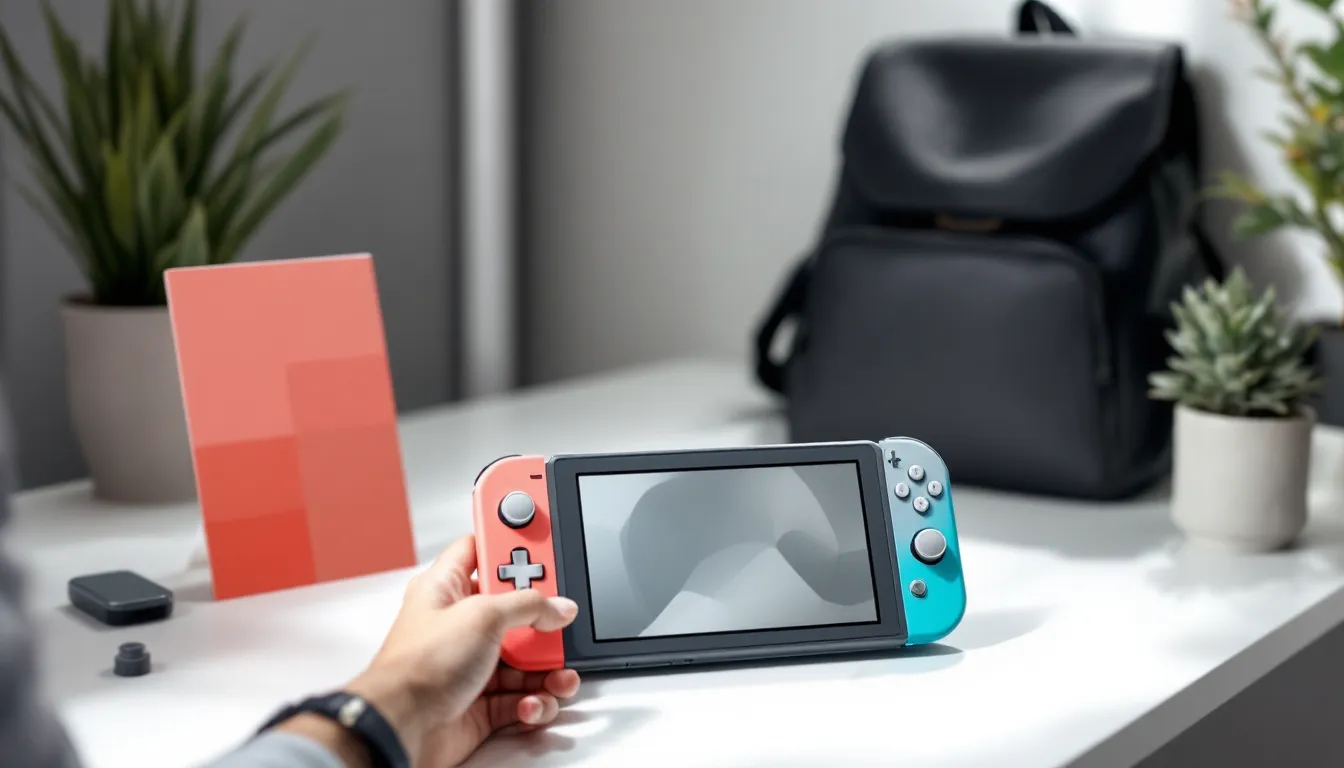
The Switch Lite’s defining feature is its portability. At 5.1 inches (130mm) wide and 9.4 ounces (275g), it’s genuinely pocket-friendly. The form factor is closer to a traditional gaming handheld like the Game Boy Advance than a full-size Switch. The device feels solid in the hands, with a slightly rubberized back that prevents fingerprints and provides decent grip.
Players coming from the standard Switch will immediately notice how much lighter and more compact the Lite is. You can slip it into a bag without thinking twice, and extended handheld sessions feel less fatiguing thanks to the reduced weight. But, some players with larger hands report occasional discomfort during longer play sessions, particularly with games that require intensive button inputs.
The integrated Joy-Con controllers mean there’s no fumbling with detaching controllers or dealing with drift issues separately, though this is a double-edged sword we’ll discuss later. The form factor makes it ideal for commutes, travel, and situations where you want true portable gaming without any additional accessories.
Color Options And Aesthetics
Nintendo has offered the Switch Lite in over a dozen color variants since launch: Gray, Yellow, Turquoise, Coral, Blue, Green, Burgundy, and several special editions tied to specific games. By 2026, the color palette remains robust, though availability varies by region and retailer.
The aesthetics feel refined and intentional. The matte finish on the back prevents the glossy shine of the original Switch, giving it a more premium feel even though the lower price. The bezels around the screen are proportionally larger than the Switch OLED, which is an expected trade-off for the lower cost. The device looks like what it is, a budget handheld, without feeling cheap or plasticky.
Color options let you express personality, and limited editions (like the Pokémon or Zelda variants released in prior years) have become collector’s items. If you care about device aesthetics, the Switch Lite delivers better visual options than most competitors in the budget handheld space.
Display And Performance
Screen Quality And Resolution
The Switch Lite’s 5.5-inch LCD screen outputs at 1280 x 720 resolution, the same as the standard Switch in handheld mode. By 2026 standards, this is lower than flagship handheld devices, but the pixel density of 269 ppi is acceptable for a 5.5-inch display. Text remains readable, and most games render cleanly without noticeable pixelation during normal play.
The display uses an IPS panel, which means colors pop better and viewing angles are decent compared to the TN panels found on older handhelds. But, it’s not an OLED screen. If you’ve ever compared an OLED screen to an LCD, you know the difference: OLED offers deeper blacks, higher contrast, and richer colors. The Switch Lite’s LCD is competent but won’t blow you away, especially if you’re comparing it to the Switch OLED or high-end gaming phones.
Brightness is adequate for most indoor environments and decently bright for outdoor play in moderate sunlight, though direct sunlight makes the screen harder to read. The refresh rate caps at 60Hz, which matches every Switch variant and most handheld titles. If you’re coming from a high-refresh-rate gaming phone (120Hz or 144Hz), the 60Hz cap might feel slightly laggy, but it’s never a practical limitation for Switch games.
Processing Power And Frame Rates
The Switch Lite runs on the NVIDIA Tegra X1 processor, identical to the original Switch. This chip was cutting-edge in 2017 but is decidedly dated by 2026 standards. But, and this is important, because every Switch game is developed for this exact hardware ceiling, the chip never becomes a limiting factor for actually playing Switch games.
Frame rates vary by title. Most first-party Nintendo games run at solid 60 FPS in handheld mode: Mario Odyssey, Breath of the Wild, Tears of the Kingdom, and recent Splatoon 3 seasons all maintain 60 FPS. Demanding third-party ports (like The Witcher 3 or Cyberpunk 2077) run at lower resolutions and frame rates, often 30 FPS or variable performance, but these compromises exist on every Switch variant.
The Lite’s performance is identical to a standard Switch in handheld mode. You’re not getting worse framerates or slower load times than anyone else playing handheld. The real difference is that you can’t dock the Lite to get TV-mode performance, which is sometimes better optimized on high-end TVs. For pure portable play, the Lite delivers parity with the standard Switch.
Game Library And Compatibility
Available Titles And Exclusive Games
This is where the Switch Lite absolutely shines. The Switch library is massive, over 3,500 games as of 2026, including virtually every notable title released in the past seven years. Nintendo’s first-party lineup is unmatched: The Legend of Zelda: Tears of the Kingdom, Super Smash Bros. Ultimate, Mario Kart 8 Deluxe, Animal Crossing: New Horizons, Splatoon 3, and hundreds more.
Third-party support remains solid, though not all ports are equal. Indies thrive on Switch, with gems like Hollow Knight, Stardew Valley, Celeste, and Hades running beautifully on the Lite’s screen. AAA ports are more hit-or-miss: demanding games get visual compromises, but they’re still playable and often worth experiencing on handheld even though the trade-offs.
One critical consideration: certain games have specific handheld requirements or features that don’t apply to the Lite. Some titles, though rare, are fundamentally designed for TV play or require detachable controllers. Examples include some motion-control-heavy games, though these are increasingly rare. Check Best Nintendo Switch Party Games for the Holidays to see which multiplayer titles work best on handheld variants.
Handheld-Only Considerations
Buying a Switch Lite commits you to handheld-only gaming for Nintendo titles. You cannot:
- Connect to a TV for big-screen play
- Use the device as a tabletop console with kickstand (it has a small kickstand, but it’s not stable)
- Detach Joy-Cons for local multiplayer using separate controllers
For some games, this is irrelevant. Single-player experiences like Zelda: Tears of the Kingdom or Metroid Prime Remastered are fantastic on handheld. But if you want to play Mario Kart 8 Deluxe with friends on a TV or use separate controllers for Super Smash Bros. Ultimate tournaments, the Lite limits your options.
Local multiplayer is possible with the Lite if everyone has their own system, or if players use attached Joy-Cons with the cramped controls that entails. It’s doable but not ideal for serious group gaming sessions. If your primary Switch use is docked TV gaming, the Lite is the wrong choice, you’d be better served by the standard Switch or waiting for the Switch 2.
Battery Life And Charging
The Switch Lite features a 4,310 mAh battery with a 5.9V/1.5A USB-C charger included in the box. Advertised battery life is 5.5 to 6.5 hours, though real-world performance varies significantly based on the game and brightness settings.
Heavy 3D games like Breath of the Wild or Mario Odyssey can drain the battery in 4-5 hours, while lighter titles and menus stretch that to 6+ hours. Reducing brightness extends battery life noticeably. The efficient LCD screen actually helps here compared to power-hungry OLED variants.
Charge time from dead to full takes approximately 3.5 hours with the included charger, which is reasonable for a handheld device. Third-party USB-C chargers work fine for faster charging using higher-wattage adapters, though this stresses the battery long-term.
For a 2026 perspective: battery life is adequate for a day of gaming but not exceptional. Modern gaming phones often offer 8-12 hours of heavy use, and specialized gaming handhelds like the Steam Deck OLED can hit 8 hours. The Lite sits in the middle, acceptable but worth considering if you’re frequently gaming during long trips without access to charging. The small form factor means carrying a portable power bank is easy, making this limitation manageable rather than deal-breaking.
Battery degradation over time is real. After 3-4 years of regular use, the Lite’s battery typically loses 15-20% of its original capacity. Replacement batteries exist but require opening the device, which voids warranties. This is a long-term consideration if you plan to keep your Lite beyond 2027-2028.
Price And Value For Money
Cost Comparison With Other Models
The Nintendo Switch Lite retails for $199.99 USD, making it the most affordable current Nintendo console. Here’s how it compares in 2026:
- Switch Lite: $199.99 (handheld only, integrated controllers)
- Standard Switch: $299.99 (TV docking, detachable controllers, tabletop mode)
- Switch OLED: $349.99 (OLED screen, better speakers, larger screen, TV docking)
- Steam Deck: Starting at $349 (more powerful, plays PC games, bigger screen)
The $100 price gap between the Lite and standard Switch is significant. If you want any TV connectivity or flexibility, the standard Switch’s extra cost is worth it. But, if you’re exclusively a handheld player, the Lite saves $100 for identical game performance.
Compared to competitors like the Steam Deck, the Lite is cheaper upfront but less powerful and has a smaller game library (though Nintendo’s library is arguably more polished). Streaming services like Xbox Game Pass for console play offer different value propositions entirely, though the Lite doesn’t support cloud gaming efficiently due to screen size and processing power.
The value case for the Lite in 2026 is: if you want cheap access to Nintendo games and accept the handheld-only limitation, it’s the best price-to-game-library ratio available.
Long-Term Value And Durability
The Switch Lite’s durability has been solid. The design is robust, and the device is repairable, screens can be replaced, batteries swapped out with difficulty, and most components are standard. Compare this to more proprietary handhelds, and the Lite’s repairability is respectable.
But, a few wear-and-tear issues are worth noting. The screen can develop dead pixels over time, particularly in units from early production runs (though this is rare). The kickstand, while present, is weaker than the standard Switch’s design and can feel unstable. Joy-Con drift, where the analog sticks gradually lose responsiveness, affects the Lite just as much as other Switch variants, and How to Optimize Your includes maintenance tips that help mitigate this.
Second-hand Switch Lite units are abundant and affordable, trading around $150-170 depending on condition. This means if you buy a Lite, resale value is reasonable if you later decide to upgrade. The long-term value is solid if you take basic care, avoid liquids, extreme temperatures, and dropping it, and your Lite should last 5+ years of casual to moderate use.
Nintendo’s support for the original Switch hardware remains strong even with the Switch 2’s announcement, meaning repairs and replacements are still available through official channels in 2026.
Pros And Cons
Key Advantages
- Affordable entry point: At $199.99, it’s the cheapest way to access Nintendo’s library.
- Genuinely portable: The compact form factor is smaller and lighter than any other current Nintendo console.
- Identical handheld performance: Game performance in handheld mode matches the standard Switch exactly.
- Massive game library: Access to 3,500+ titles, including all major Nintendo releases and quality indies.
- Integrated controllers: No need to manage detachable Joy-Cons or worry about them drifting separately.
- Color variety: Multiple color options let you personalize your device.
- Proven reliability: Seven years of market data shows the Lite is a solid, long-lasting device.
- Ecosystem integration: Online multiplayer, cloud saves, and game-sharing features work seamlessly.
Notable Limitations
- Handheld-only gameplay: No TV docking, no tabletop mode, limiting some play styles.
- LCD screen vs. OLED: Colors and contrast are noticeably inferior to the Switch OLED, even though being perfectly functional.
- Integrated controllers: Joy-Con drift affects the entire device, not just one controller. Replacement requires sending in the whole console or technical skill.
- Limited multiplayer flexibility: Local multiplayer requires multiple systems or cramped shared-controller setups.
- Smaller screen: The 5.5-inch display is noticeably smaller than standard Switch’s 6.2 inches and Switch OLED’s 7 inches.
- Outdated processor: By 2026, the Tegra X1 chip is aging. Most games run fine, but demanding ports show their limitations.
- No TV output: You can’t stream or record gameplay directly to a capture card without external equipment.
- Battery degrades over time: After 3-4 years, expect 15-20% battery capacity loss.
One consideration worth flagging: external reviews on platforms like Metacritic and GameSpot consistently praise the Switch Lite for its affordability and portability but note the screen quality gap and handheld-only limitation as primary drawbacks.
Who Should Buy The Nintendo Switch Lite?
The Switch Lite is ideal for:
- Budget-conscious players: If $100 savings matters and you exclusively play handheld, the Lite is the obvious choice.
- Travelers and commuters: The compact form factor makes it perfect for portability. You can genuinely slip it into a backpack without it dominating space.
- Secondary console buyers: If you already own a PS5 or Xbox Series X and want handheld Nintendo access, the Lite serves this role perfectly.
- Casual Nintendo fans: Players who want Animal Crossing, Pokémon, or Mario Kart without the TV gaming premium.
- Kids and younger players: Parents appreciate the lower price point, and the smaller form factor sometimes fits younger hands better.
- Single-player game enthusiasts: If you mostly play story-driven games like Zelda or Metroid, the Lite delivers 100% of the experience.
The Switch Lite is not ideal for:
- Local multiplayer enthusiasts: If you regularly host gaming sessions with friends and value the big-screen experience, the standard Switch or Switch OLED is necessary.
- Competitive players: Games like Super Smash Bros. Ultimate tournaments often use TV displays and external controllers: the Lite limits this.
- Players wanting future-proofing: With the Switch 2 announced, buying a Lite in late 2026 is gambling on Nintendo’s continued support for original Switch games.
- Early adopters of new tech: If you want the latest hardware, the upcoming Switch 2 has been officially announced, though availability and pricing remain fluid.
- Screen-quality purists: If you’ve experienced OLED gaming on phones or the Switch OLED, the LCD screen will feel like a downgrade.
The decision eventually hinges on three questions: Do you want handheld-only gaming? Can you afford $199.99 without compromising other needs? Does the smaller screen and lack of docking bother you? Answer yes to all three, and the Switch Lite makes perfect sense in 2026.
Conclusion
The Nintendo Switch Lite remains a compelling portable gaming device in 2026, seven years after its debut. It does one thing exceptionally well: delivers affordable, handheld Nintendo gaming without compromise. For that specific use case, it’s hard to beat.
The limitations are real and worth understanding. The lack of TV connectivity, the LCD screen, and integrated controllers rule it out for some players. The aging processor doesn’t affect current games but hints at future constraints as Switch 2 development picks up pace.
If you’re looking for a budget handheld to play Zelda, Pokémon, Mario, or the hundreds of quality indies, the Lite delivers on that promise at a price that’s genuinely accessible. If you need flexibility, docking, tabletop play, premium screen quality, or powerful hardware, you’ll need to spend more.
The Switch Lite’s 2026 value proposition is straightforward: it’s the cheapest Nintendo console, it plays every Nintendo game available, and it’s portable enough to go anywhere. For millions of gamers, that’s enough. Whether it’s enough for you depends on what you actually want from a gaming device. IGN’s reviews and other major outlets have evolved their recommendations over time, and the consensus remains that the Lite is best suited to specific player types rather than being a universal recommendation, and that assessment still holds true today.