

A decade ago, online casino players faced a simple choice: play against computer-generated outcomes or visit a physical casino for the authentic table game experience. Live dealer technology eliminated this compromise. By 2026, live dealer games will represent the fastest-growing segment of online gambling, combining the convenience of digital platforms with the authenticity and social interaction of brick-and-mortar casinos.
The technology behind live dealer games is more sophisticated than most players realize. What appears as a simple video stream of a dealer shuffling cards or spinning a roulette wheel actually involves multiple camera angles, optical character recognition, real-time data transmission, ultra-low latency streaming, and complex software integration—all synchronized to deliver a seamless experience where your bet placed on a smartphone in Tokyo reaches a dealer in Malta within milliseconds, with the result streamed back just as quickly.


Live Dealer Studios: Where Digital Meets Physical Casino Gaming
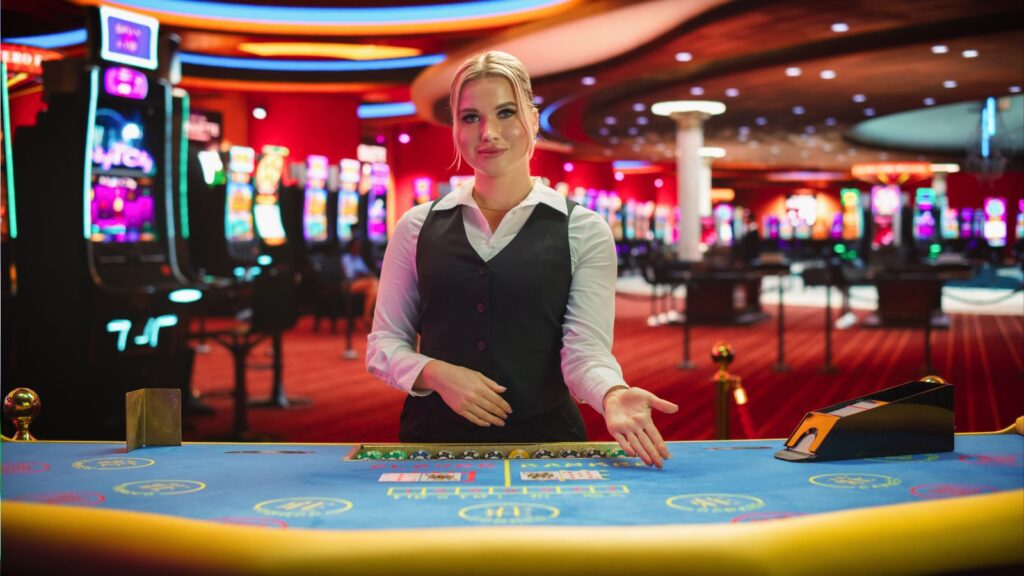
Understanding how live dealer games work starts with the studios where they’re broadcast. These aren’t makeshift setups with a webcam and a folding table. Professional live dealer studios are purpose-built facilities designed to replicate the atmosphere of high-end casinos while incorporating the technical infrastructure required for global streaming.
Physical Studio Design
Live dealer studios typically feature dozens of tables operating simultaneously, each equipped with multiple high-definition cameras capturing different angles—overhead shots showing the entire table layout, close-ups of the dealer’s hands during card shuffles or roulette spins, and wide shots establishing the casino atmosphere. Lighting is calibrated precisely to eliminate glare on cards or chips while maintaining the warm ambiance players expect from casino environments. Soundproofing ensures that audio from one table doesn’t bleed into adjacent broadcasts, while climate control maintains consistent conditions for equipment and dealer comfort during long shifts.
Dealer Training and Operations
Live dealers undergo extensive training beyond traditional casino dealer schools. They must master the technical aspects of interacting with the streaming interface, manage the pace of games to accommodate players across different connection speeds, maintain engaging conversation with an invisible audience, and handle the unique situations that arise when serving hundreds of players simultaneously, rather than the six or seven seated at a physical table. Professional dealers often work in shifts to maintain energy and focus, with studios operating 24/7 to serve global markets across all time zones.
Technical Infrastructure
Behind the visible studio floor lies significant technical infrastructure. Server rooms house the systems that process bets, verify game outcomes, manage player connections, and synchronize everything in real-time. Redundant internet connections ensure uninterrupted streaming even if one provider experiences issues. Backup power systems prevent outages from disrupting active games. The entire operation resembles a television broadcast studio merged with a casino floor, managed by both gaming professionals and IT specialists.
RNG-Based Games: How Computer-Generated Casino Games Operate
To understand what makes live dealer technology unique, it’s helpful to first examine how traditional online casino games work. Random Number Generator (RNG) based games have formed the foundation of online gambling since their inception, and they remain the most common type of digital casino game.
How RNG Games Function
RNG games use complex algorithms to generate random outcomes for each game round. When you click “spin” on a digital slot machine or “deal” in video poker, the software instantly calculates the result using a mathematical formula that produces unpredictable numbers. These algorithms are tested extensively by independent laboratories to ensure they produce genuinely random results that match the expected mathematical probability of each outcome. The entire game exists as software code—there are no physical cards, dice, or wheels involved.
Advantages of RNG Games
RNG games offer several benefits that keep them popular despite the rise of live dealer alternatives. They’re available instantly with no waiting for other players or dealer actions, operating at whatever pace the player prefers. Minimum bets can be much lower since there’s no need to pay dealer salaries or maintain physical equipment. The variety is virtually unlimited—developers can create any game concept imaginable without physical constraints. RNG games also function perfectly regardless of internet connection quality since they require minimal data transmission.
Player Experience
The RNG experience is entirely solitary and self-paced. You’re playing against the software, with outcomes determined the instant you click. There’s no social interaction, no observation of physical randomization processes, and no waiting. For players who value speed, low stakes, and game variety above all else, RNG games remain the preferred option. The experience is consistent and predictable in its format, if not in its outcomes.
Live Dealer Games vs. RNG Games: Technical and Experiential Differences
The fundamental difference between live dealer and RNG games extends far beyond “one has a real person.” The entire technical architecture, business model, player experience, and operational complexity differ substantially between these two approaches to online casino gaming.
Randomization Methods
In RNG games, randomness comes from mathematical algorithms tested by laboratories to ensure fairness. In live dealer games, randomness comes from physical processes—an actual deck of cards shuffled by human hands, a physical roulette wheel spun by a dealer, dice rolled on a real table. This physical randomization is captured by cameras and optical character recognition (OCR) technology reads the results, which are then transmitted to players. Many players find physical randomization more trustworthy than computer-generated outcomes, even though both are equally random when properly implemented and tested.
Game Pace and Social Dynamics
RNG games operate at the player’s chosen speed, while live dealer games follow the dealer’s pace, which must accommodate all players at the virtual table. This creates different psychological experiences. RNG players can spin hundreds of times per hour if desired, while live dealer blackjack might see 40-50 hands per hour. However, live dealer games offer chat functions where players can interact with dealers and sometimes other players, creating social engagement absent from RNG experiences. This slower pace with social elements appeals to players seeking entertainment beyond pure gambling mechanics.
Technical Requirements
RNG games require minimal bandwidth since they’re essentially just software interfaces with occasional server communication to verify bets and balances. Live dealer games stream high-definition video continuously, requiring stable broadband connections. A player with inconsistent internet can play RNG games without issues, but may experience frustrating lag or disconnections in live dealer games. According to Gaming Laboratories International’s live dealer testing and certification protocols, live dealer systems must meet stringent technical standards for stream quality, synchronization between video and game state, and failover procedures when connections drop.
Operational Costs and Minimum Bets
Live dealer games cost significantly more to operate. Casinos must pay dealer salaries, maintain studio facilities, manage complex technical infrastructure, and handle higher licensing fees for live dealer software. These costs are passed to players through higher minimum bets—while RNG blackjack might accept $1 bets, live dealer blackjack typically starts at $5-10 or higher. VIP tables with higher limits help casinos recover costs from high-volume players. This economic reality means live dealer games target different player segments than low-stakes RNG games.
Game Variety and Availability
RNG games offer vastly more variety—thousands of slot themes, numerous video poker variants, and creative game mechanics impossible with physical equipment. Live dealer games are limited to traditional table games: blackjack, roulette, baccarat, and poker variants, plus some game show-style options. Additionally, live dealer games can experience capacity limits during peak hours when all table seats are occupied, while RNG games have unlimited capacity. For players seeking exotic game variants or always-available access, RNG games maintain advantages despite live dealers’ growing popularity.
The choice between live dealer and RNG games ultimately depends on player priorities. Those valuing social interaction, physical randomization, and an authentic casino atmosphere gravitate toward live dealer despite higher minimums and a slower pace. Players prioritizing game variety, low stakes, fast play, and consistent availability prefer RNG games. Many online casinos offer both options, with some players using RNG games for high-volume play and switching to live dealer for a more immersive experience. For comprehensive comparisons of platforms offering both game types and how they integrate these different technologies, casinoatlas.com provides detailed breakdowns of online casino software providers and their live dealer versus RNG game offerings.
The Streaming Technology Making Live Dealer Games Possible
The technical achievement of live dealer gaming becomes clearer when examining the streaming technology that makes it work. Delivering a real-time casino experience to thousands of simultaneous players across the globe requires sophisticated systems operating at the intersection of video broadcasting and online gambling.
Multiple Camera Systems and Dynamic Switching
Each live dealer table typically has 3-5 cameras capturing different perspectives. The software automatically switches between these camera feeds based on game action—showing an overhead view during betting periods, switching to a close-up of the dealer’s hands during card deals, and cutting to wheel shots for roulette spins. This dynamic camera switching creates a viewing experience far more engaging than a single static angle, but it requires precise timing coordination between camera feeds and game state to ensure players see relevant angles at appropriate moments.
Optical Character Recognition and Game State Tracking
Perhaps the most impressive technical component is OCR technology that reads physical game outcomes and instantly translates them to digital data. When a dealer reveals cards in blackjack, sophisticated image recognition software identifies the specific cards within milliseconds. When the roulette ball settles, sensors and cameras determine the winning number. This physical-to-digital translation must be absolutely accurate—misreading a card or number would create game integrity failures. The OCR results are cross-referenced with dealer input for verification, and any discrepancies trigger immediate review before results are settled.
Ultra-Low Latency Streaming
Traditional video streaming tolerates delays of several seconds—acceptable for entertainment but catastrophic for live gambling, where players need real-time feedback on active bets. Live dealer technology uses specialized streaming protocols that minimize latency to under one second in optimal conditions. This requires substantial bandwidth, content delivery networks with servers geographically distributed to bring streams closer to players, and adaptive bitrate streaming that automatically adjusts video quality based on each player’s connection speed. Despite these optimizations, players on slower connections may experience slightly delayed streams, which is why most live dealer interfaces disable betting shortly before outcomes to prevent late bets that arrive after results are determined.
Synchronization Between Thousands of Players
The technical challenge multiplies when hundreds or thousands of players participate in the same game simultaneously from different countries with varying connection speeds. The system must receive bets from all players, close betting before the outcome is determined, process the physical game result through OCR, calculate wins for potentially thousands of different bet combinations, update all player balances simultaneously, and stream the result to everyone in near real-time. This requires a distributed server architecture, database systems capable of handling thousands of concurrent transactions, and careful state management to ensure no player experiences an advantage or disadvantage based on their connection speed or geographic location.
What Players Should Know About Live Dealer Gaming
Understanding the technology behind live dealer games helps players make informed decisions about when and where to play these games, what to expect from the experience, and how to evaluate different live dealer offerings.
Live dealer games represent a genuine technological achievement that successfully bridges physical and digital gambling. They’re not simply video streams of dealers—they’re complex systems integrating broadcast technology, image recognition, low-latency streaming, game state management, and regulated gambling operations. This complexity explains both the higher costs and the premium many players willingly pay for the experience.
When choosing live dealer games, players should consider their internet connection quality, as inconsistent connections create frustration with lag or disconnections. Minimum bet requirements tend to be higher than RNG alternatives, so bankroll size matters more. The slower pace means fewer betting opportunities per hour compared to RNG games, which affects both entertainment duration and variance. However, for players who value the authenticity of physical randomization, social interaction with dealers, and the immersive atmosphere of real casino environments, live dealer technology delivers an experience that RNG games cannot replicate, regardless of graphics quality or interface design.