
The traditional MMORPG is often a game of extremes. On one hand, you have the treadmill models where progress is measured in hundreds of hours of repetitive labor. On the other, the hyper financialized Web3 market simulators where every sword swing is calculated against a gas fee. Zeeverse is carving out a third path, one that treats economic utility like a microdose: subtle, enhancing, and integrated so naturally that it elevates the experience without overwhelming the senses.
Moving Beyond the Marketplace Trap
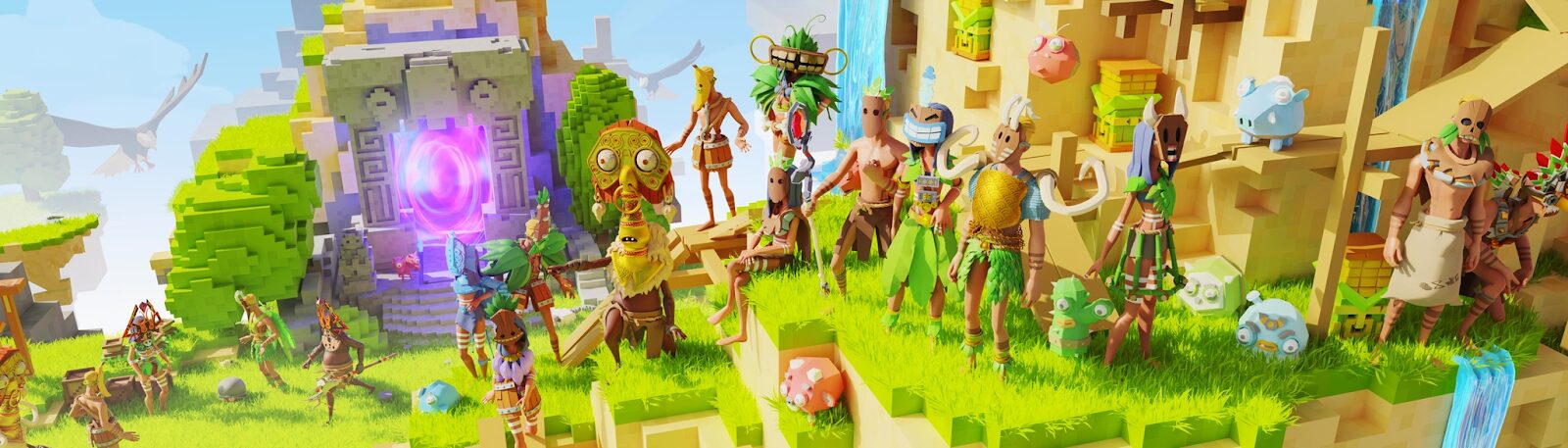
Most modern free to play titles struggle with a fundamental paradox: how to create a player driven economy without turning the game into a job. Zeeverse, an open world creature collecting MMORPG, addresses this by leaning into player to player trade while keeping the core gameplay loop, hatching Zees, exploring biomes, and strategic turn based combat, protected from market volatility.


The architecture behind this is a layered dual system. While $VEE serves as the on chain utility for high level evolutions and the Game Exchange (GEX), the internal game logic runs on Coins. This allows the developers at Beetroot Lab to microdose the economic impact, shielding casual players from price swings while giving dedicated Shamans a robust marketplace to master.
The Foundation of Launch
Building a sustainable economy requires more than just clever game design; it requires a whole ecosystem. This is where Forest.inc comes into play. Forest Protocol – a permissionless launchpad running on BNB chain, listed on numerous exchanges from Binance, MEXC, Gate.io , Kraken and more – is a core part of the Zeeverse ecosystem, built on the in-house systems and mechanics developed during the creation of the game
By acting as a bridge between a project’s vision and the actual market, Forest ensures that the Utility in a game like Zeeverse is not just a buzzword, but a functional, tradable asset with a long term roadmap. In the Zeeverse ecosystem, the Forest protocol even underpins a specialized reward system where players earn SEEDs through active participation, which can then be used to claim shares of future airdrops.
AI Assisted Worldbuilding as Economic Utility
ZeeVerse’s most innovative utility does not come from a sword or a potion, but from the land itself. The project is currently stress testing an AI assisted creation tool that allows landowners to build their own environments.
Rather than a steep learning curve involving 3D modeling software, players use a text based generator. You prompt, and the system, using the game’s existing modular asset library, generates a live, playable island. This does two things for the economy: drives Asset Demand – Player generated spaces create a perpetual need for cosmetic items, voxels, and crafting materials. Scales Content Naturally: Instead of developers being the sole bottleneck for new content, the community expands the game’s surface area, creating a self sustaining loop of exploration and trade.
A Decade of Discipline
Perhaps the most unique utility of Zeeverse is the team itself. Beetroot Lab has worked together for over ten years, a rarity in the fast moving world of mobile games. From numerous awards received – Best Strategy game of the Year by Huawei, Best New game by Apple and Google to a brand partnership with Conor McGregor, this continuity is reflected in their refusal to chase short term hype. They are currently using a soft launch phase to tune the unglamorous parts of the game: onboarding friction and early game clarity.
For the mind behind Zeeverse, CEO Edgars Vecozolins, the goal is not to build a marketplace that happens to have a game attached. It is to build a high fidelity MMORPG where the economy is a tool for expression and agency.
What is Next?
As Zeeverse approaches its global release later this year, the focus is shifting from systems validation to community scaling. The game is currently proving that you can have a player led economy that feels fair, where success comes from strategy and skill mastery rather than who has the biggest wallet.