
Are you breaking records in all the aiming simulators and carrying your team more often than not, but still feel stuck? You’ve clearly got skill, but that isn’t enough to come out on top as you start to play in the big leagues. What could you be missing? Here are the core factors you can improve and influence to let your raw skill truly shine.
Key Takeaways
- Not being phased by setbacks and being a reliable teammate trumps chasing MVP status.
- Hardware and connection stability eliminate external bottlenecks. A good PC will ensure high and smooth framerates, while gaming VPNs can sometimes help with routing and lag reduction.
- Multiplayer games never stand still. What worked yesterday might become obsolete with today’s update, so adapting quickly is a must.
Mindset
Imagine this: you’re down by several points after a streak of bad plays, and the only way to catch up is to win every remaining round. No pressure, right?


It’s easy to play well while you’re winning; having the right mindset keeps you from tilting when the situation looks hopeless. With the right mindset, you’re able to keep your cool and reset. You can create new plays and stay rational instead of letting rage or shame get the better of you.
Consistency
Wiping the entire enemy team is a special kind of high, but can you pull off so hard reliably? More importantly, do you tend to balance brilliant plays like that out by often being the first to bite the bullet?
Consistency is about creating a dependable baseline. It means you play competently and don’t drag the team down even when at your worst. Being inconsistent means being unpredictable, and there’s no room for that if you hope to climb out of ELO hell.
Communication
Unless you’re into fighting or trading card games, you’re not playing solo. Even if you’re the star player in your premade, coordinated opposition can easily gang up on and neutralize you. Stubbornness and selfishness don’t win team-based games – being in sync with the others does.
Luckily, getting onto voice chat isn’t game-dependent with Discord around. Even players in countries where it’s banned can get around that with a VPN. If this is the route you will take, check whether using a VPN is safe in your region. Say it’s risky or not allowed where you are, consider the alternatives.
Being on the same page instantly multiplies individual skill. It lets you set up ambushes or effectively rebound from failed plays. Skill alone can’t control what a teammate does, but the right callout at the right time will.
Hardware
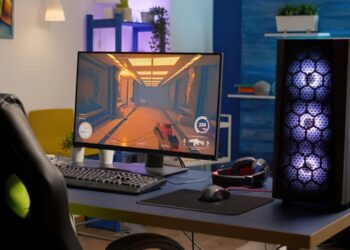
Your hardware setup might just be a legitimate reason why you’re hitting a skill cap. Competitive games typically have low requirements, so anyone can get into them. If you have an old or low-tier rig, you might not even realize that you’re missing out.
60 FPS is fine for singleplayer games, but definitely not enough for competitive multiplayer anymore. Even if your monitor can hit 144Hz, your current CPU and GPU might not be able to consistently push all those frames out. If upgrading isn’t an option, lowering details and turning on DLSS or FSR may still help.
What peripherals you use matters, too. You don’t have to spend $250+ on them. That said, you need a lightweight, precise rodent and a keyboard with low actuation force that instantly translates your thoughts into action.
Game Knowledge
Skill might help you become decent at a new game faster, but improving past a certain point only comes with experience and knowledge. What that means depends on the situation and game. It might be something as basic as knowing the best time to drop a smoke grenade. Or, it might be in-depth knowledge of map layouts and angles that let you score headshots without being in the enemy’s line of sight.
Knowledge isn’t static, either. That’s especially true for games like MOBAs, where different characters get introduced, nerfed, or buffed with each new patch. Keeping up with the meta means knowing why and when to counter an ability or play, not just how.