
Placeholder art is temporary visual content used to test a game before its final characters, environments, props, and effects are complete. Its purpose is not to make an early build attractive. It gives developers enough visual information to judge scale, movement, interaction, combat, and level flow while major decisions are still easy to change.
A plain cube can represent a door, enemy, treasure chest, or vehicle. That may be sufficient for the first few hours of prototyping. Leave it in place for too long, however, and the team may begin testing an abstraction rather than the game it intends to build.


Good placeholder art sits between an empty grey box and a production-ready asset. It communicates what matters without demanding too much time or emotional attachment.
A Placeholder Should Answer Questions
The simplest placeholder is useful when the team is testing a simple question. If developers only need to know whether a player can jump across a gap, two basic platforms may be enough.
As the project develops, the questions become more specific:
- Can players distinguish an enemy from a friendly character?
- Does a weapon look appropriate for its attack range?
- Is an object clearly interactive?
- Can the camera frame a large enemy without hiding the player?
- Does a corridor accommodate the intended movement speed?
At this point, identical cubes stop being useful. They do not communicate posture, reach, direction, weight, or function. A more informative placeholder might still lack finished textures and animation, but its approximate silhouette and dimensions allow the team to make better decisions.
The right level of detail therefore depends on what the build is trying to prove.
Scale Problems Appear Earlier With Recognizable Forms
Numbers in an editor do not always communicate how an object will feel during play.
A two-meter doorway may be technically large enough for a character, yet feel cramped when viewed through the gameplay camera. A sword with realistic dimensions may appear too short during fast combat. A vehicle might fit inside a garage but leave no space for the player to move around it.
Recognizable placeholder models expose these problems earlier because developers can judge objects in relation to one another. It is easier to understand the space occupied by a table, staircase, creature, or machine when the asset roughly resembles what it represents.
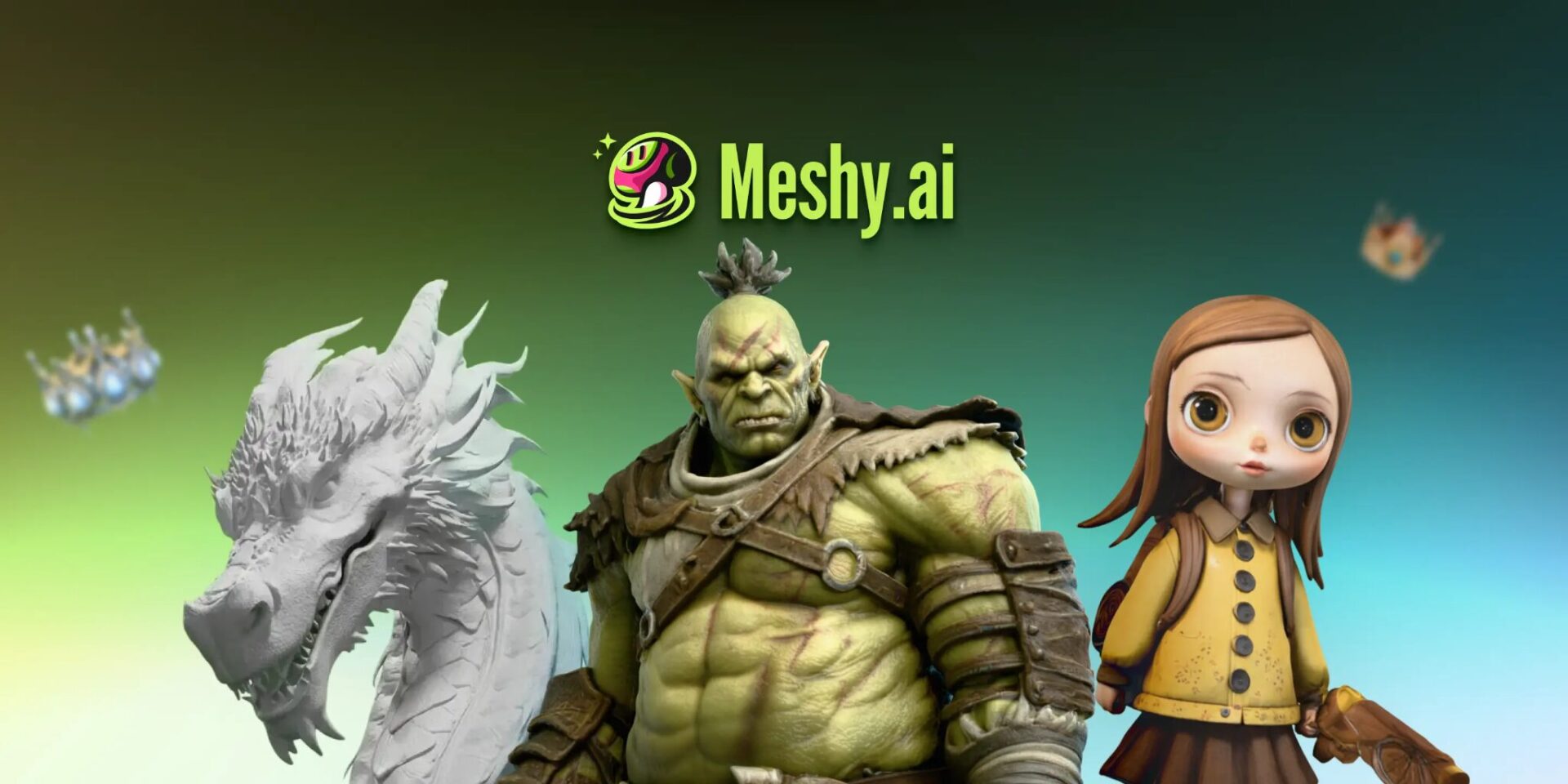
At this stage, teams may use primitive modelling, existing asset libraries, or AI 3D generators such as Meshy AI to create rough visual references for scale testing. These models do not need finished textures or production-ready geometry. They only need to represent the intended object closely enough to reveal whether its size and proportions work inside the game.
Silhouette Can Affect Gameplay Before Art Direction Is Final
Players often identify objects from their overall shape before noticing texture or surface detail. This makes silhouette relevant even during prototyping.
Consider three enemies built from the same generic capsule. One is intended to charge, another attacks from a distance, and the third supports nearby enemies. If all three look identical, testers must rely on labels, colours, or memory to understand them.
Give each one a different temporary silhouette and the test becomes more meaningful. A broad forward-leaning body can suggest a charging enemy. Long arms or a visible weapon can indicate range. A tall shape with an elevated device may communicate a support role.
These are not final character designs. They are visual hypotheses. Testing them helps the team learn whether the intended gameplay role can be understood before investing in final modelling, rigging, and animation.
Interaction Needs Visual Evidence
A level becomes frustrating when interactive and decorative objects are difficult to distinguish.
During early development, teams often mark interactive items with bright colours. This is fast, but it can conceal a future readability problem. If a door is only recognisable because it is neon green, the test does not reveal whether its final shape, placement, and animation will guide the player successfully.
An effective placeholder includes the parts that explain interaction. A chest needs a visible lid. A lever needs a handle and a believable direction of movement. A breakable wall needs a boundary that separates it from the surrounding architecture.
The goal is not realism. The goal is evidence. Players should be able to form a reasonable expectation about what an object does.
Better Prototypes Do Not Need to Become Expensive
Creating more informative placeholders can sound like additional production work, especially for a small studio. The solution is not to give every prototype asset final-quality detail. It is to establish a strict temporary standard.
A useful placeholder may include:
- A readable silhouette
- Approximately correct dimensions
- A clear forward direction
- Basic materials or role colours
- Simplified collision
- Only the moving parts required for testing
Everything else can wait.
Teams can reuse primitive shapes, modify existing internal assets, or create rough models specifically for a test. Meshy AI 3D agent can also help explore early asset concepts when a team needs something more informative than a cube but is not ready for full production. Any generated model still requires human review before use, particularly for scale, topology, collision, visual consistency, rigging, and performance.
The important rule is that the production method must remain proportional to the question being tested. Spending two days on an asset for a ten-minute experiment defeats the purpose of prototyping.
Temporary Art Can Become Too Convincing
Poor placeholders create problems, but highly polished ones can create a different kind of risk.
Once an asset looks finished, team members may become reluctant to change it. Stakeholders may assume that the underlying mechanic is further along than it really is. Testers may focus on texture quality instead of movement, readability, or interaction.
This is one reason placeholder art should look intentionally temporary. Simple materials, limited colour palettes, visible labels, or deliberately rough surfaces can signal that the asset remains open to revision.
The team should also record what each placeholder is testing. A temporary enemy model might exist to verify attack distance rather than final anatomy. A building may test navigation rather than architectural style. Naming the question prevents feedback from drifting toward decisions that have not yet been made.
Replace Placeholders According to Risk
There is no single point when all temporary assets should disappear. Replacement should follow production risk.
Assets tied closely to core mechanics usually need attention first. The player character, primary enemies, important weapons, doors, platforms, and frequently used interactive objects can affect animation, collision, camera behaviour, and level design. Waiting too long to validate them may cause expensive changes later.
Background decoration can remain simple for longer unless it affects navigation or performance. A distant structure may only need an accurate silhouette. A small object on a shelf may not need a unique model until the visual direction is stable.
This risk-based approach prevents teams from polishing low-impact objects while fundamental gameplay assets remain unresolved.
Questions Teams Should Ask During Every Prototype Review
Does the asset provide information the tester needs?
If removing the model’s colour or label makes its function impossible to understand, its shape may need improvement.
Is the placeholder testing the right level of detail?
A movement test may only require scale and collision. An enemy-readability test requires a clearer silhouette and orientation. Extra detail that does not support the test is unnecessary.
Will replacing it later affect other systems?
If the final asset could change collision, animation, camera framing, navigation, or performance, the team should validate a more representative version sooner.
Are testers commenting on the intended question?
When feedback concentrates on unfinished surfaces instead of gameplay, the placeholder may be too detailed, too vague, or poorly explained.
Temporary Does Not Mean Unimportant
Placeholder art is valuable because it allows teams to be wrong while being wrong is still affordable.
A useful temporary model exposes problems with scale, readability, interaction, movement, and camera placement. It allows artists and designers to compare ideas without treating any one version as permanent. Most importantly, it connects abstract game mechanics with the visual experience players will eventually encounter.
The best placeholder is not the ugliest asset that technically works, nor the most impressive model a team can produce. It is the least expensive visual representation that makes the current test honest.