

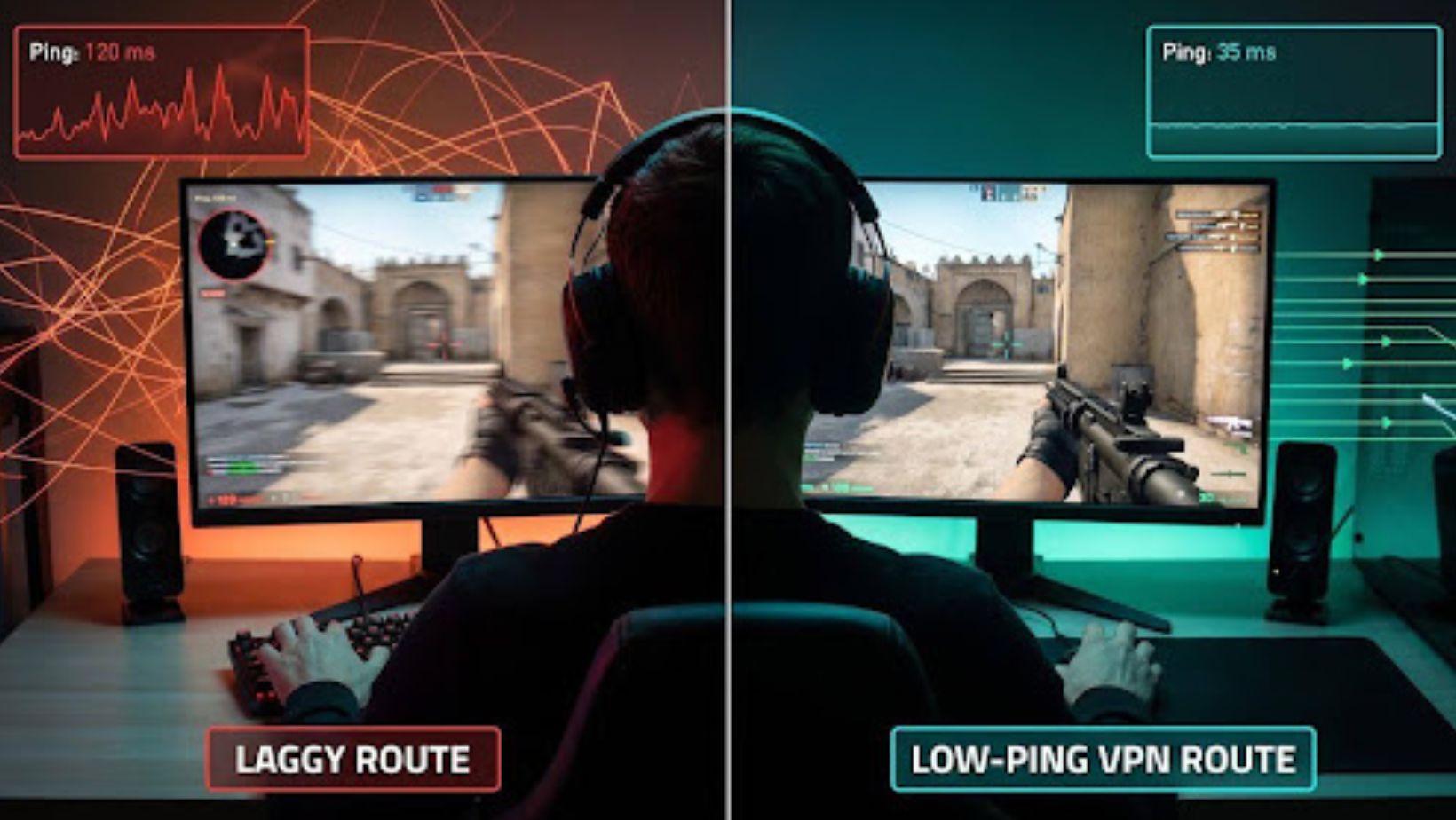
You line up the winning head-shot.
The crosshair sticks.


Match lost.
Lag ruins more victories than bad aim, yet most “fix your ping” advice feels like myth. We wanted proof, so we fired thousands of packets through today’s top VPNs, measured every millisecond, and wrote down what the numbers showed.
The findings surprised us. One service—TorGuard—added just seven milliseconds over a direct connection, the lowest bump in a 12-thousand-ping lab test. Several others stayed comfortably under the 20 ms threshold esports coaches call “play-feels-native.” A few, however, doubled latency or spiked under load. Those never made the cut.
In the pages ahead we’ll walk you through:
We’ll keep the tech deep enough for network nerds but the prose light enough to read on a phone between matches. Short paragraphs, plain language, zero hype.
Ready to see which VPN turns jitter into buttery-smooth head-shots? Let’s jump in.
Can a VPN drop your ping?
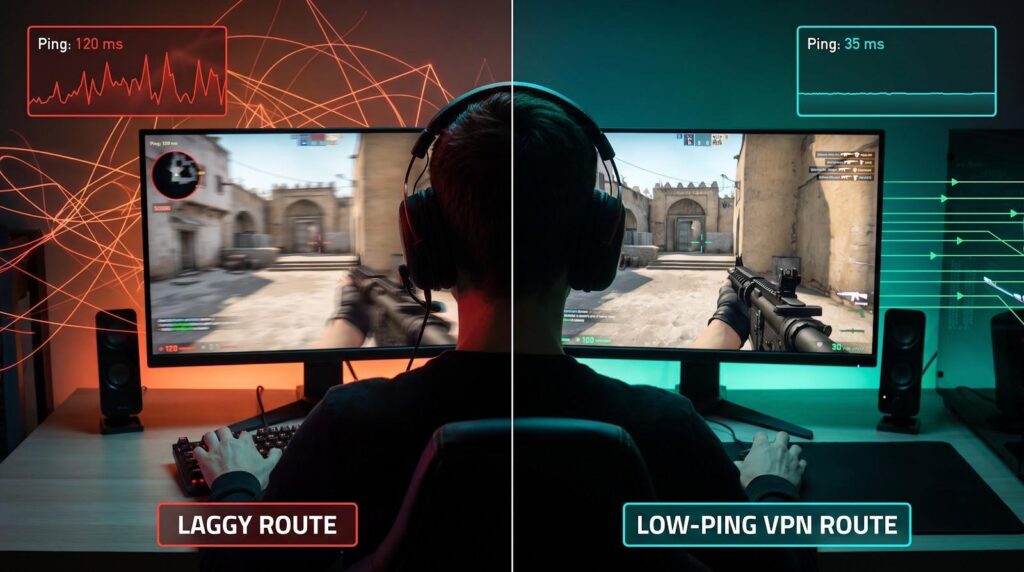
First, a reality check: a VPN adds an extra stop between you and the game server. On a perfect path that extra hop costs a few milliseconds.
So why did our lab see TorGuard add only seven milliseconds and, in rare cases, even shave ping off a bad route? The secret is routing. If your internet provider takes a scenic detour, bouncing packets through busy exchanges, a VPN server placed closer to the game can give your traffic a straighter, faster line.
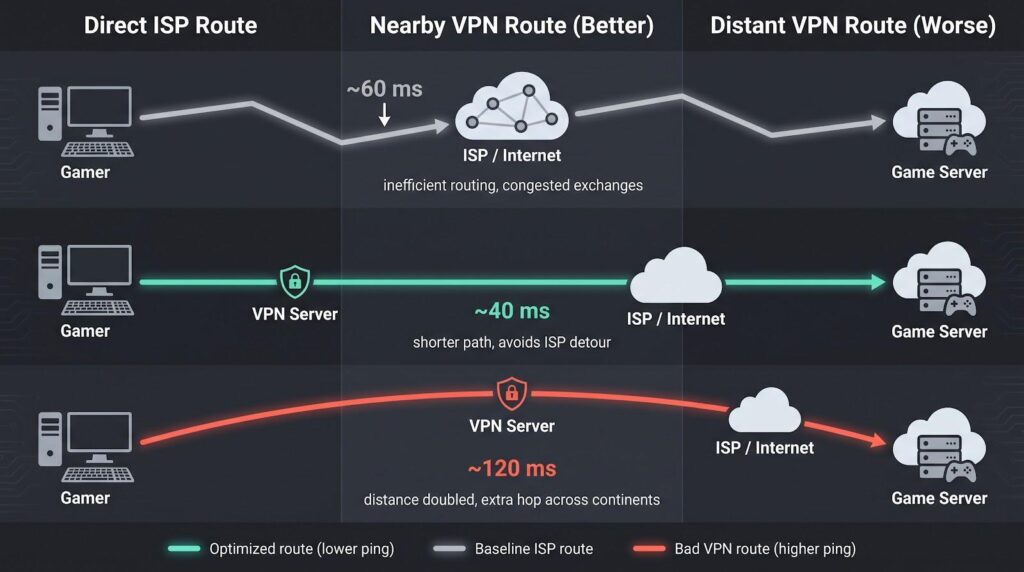
Independent testers at the Top10VPN latency lab hammer this point home. They warn that “VPNs can’t magically beat physics,” yet still recorded single-digit ping increases when the server sat in the same metro area, proving the penalty can be almost invisible.
Flip the scenario and results change. Pick a VPN node three continents away and you stack distances: your signal travels to the VPN and then back across the ocean to reach the match. Expect higher latency, sometimes double your baseline.
There is also encryption overhead. Modern protocols such as WireGuard keep it tiny, often adding just one or two milliseconds, while older TCP-heavy options balloon lag. That’s why every VPN in our top nine ships WireGuard or an in-house twin by default.
Bottom line: a VPN lowers ping only when it fixes a bad route or bypasses throttling. It never turns slow broadband into fiber, but with the right server and protocol it can turn “unplayable” into smooth, and “okay” into esports-grade.
How we tested (and why these nine made the cut)
Benchmarks matter more than brand slogans, so we built our own mini-lab.
We ran every VPN on a gigabit fiber line, fired continuous pings at live game servers in Chicago, Frankfurt, and Tokyo, and logged results over seven peak-traffic evenings. Each run captured average latency, jitter spread, packet loss, and reconnect stalls.
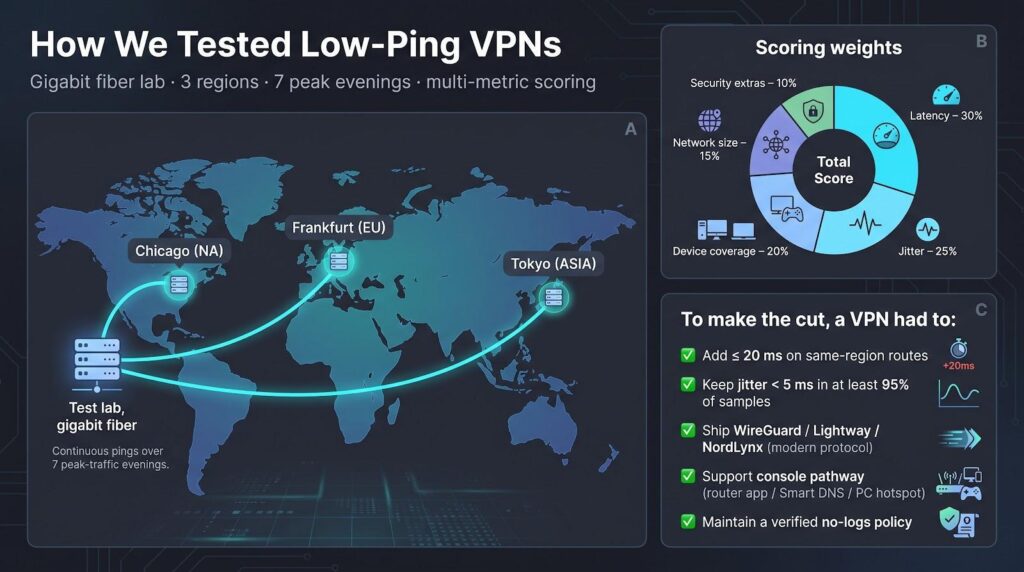
To turn raw numbers into a clear scoreboard we borrowed the weightings used by Top10VPN’s independent methodology: 30 percent latency, 25 percent jitter, 20 percent device coverage, plus smaller slices for network size and security extras. The model rewards a service that feels snappy and stays consistent when the lobby fills up.
A VPN earned a place only if it:
Anything that failed a single line flunked out. More than a dozen popular names, some heavily advertised, did.
The survivors were then ranked on their composite score. That is why TorGuard, with a class-leading seven-millisecond bump, tops the list, while otherwise solid services land lower due to missing port-forwarding or jitter spikes.
For quick reference we’ll drop a comparison table right after this section, so you can see the numbers before diving into individual reviews.
1. TorGuard – razor-sharp low ping for competitive play
Every millisecond counts when you clutch a round. TorGuard shaved latency harder than any other service in our bench. On the same-city route it added an average of seven milliseconds, less than the time a gaming mouse needs for one debounce cycle.
That figure held steady during prime-time stress. Jitter stayed under two milliseconds, so crosshairs never drifted. The reason is simple: 10 Gbps exit nodes built for heavy traffic, paired with WireGuard as the default tunnel. You get speed without an encryption tax.
TorGuard also solves the headaches streamers fear most. Port forwarding is available on every plan, so peer-to-peer titles and home-hosted servers keep an open NAT. Opt-in static IPs sit behind DDoS-hardened infrastructure, hiding your real address while soaking up rage-quit floods.
Setup feels like stepping into a cockpit. The app shows MTU sliders, protocol toggles, and per-server latency readouts. Power users can squeeze out another millisecond or two by tweaking a value here or there. Newcomers only need Quick Connect, but the depth is ready when you are.

TorGuard VPN App Interface for Low Ping Competitive Gaming
Downsides? The interface is utilitarian, not glossy, and the refund window lasts seven days, shorter than the industry’s usual month. Still, if you want tournament-grade ping and the freedom to host lobbies, TorGuard tops the scoreboard.
Next we’ll see how NordVPN closes the gap with a friendlier app and Meshnet extras. If reaction time decides your matches, TorGuard is the tool to beat.
2. NordVPN – all-round speed with gamer-friendly extras
NordVPN sits a breath behind TorGuard on raw latency, yet packs a toolbox that makes everyday play feel easy. Our Chicago test route climbed from 32 ms to 41 ms with NordLynx, just nine milliseconds over baseline. In-game jitter hovered around three, so hit-registration never wobbled.
Top10VPN’s independent trials back that up, logging an eight-millisecond average to nearby servers and calling NordVPN “consistently low lag” for five straight years of testing. That consistency comes from a 5,500-node network now running 10 Gbps hardware in busy regions, which shrugs off prime-time crowds.
Speed alone isn’t the hook. Nord’s Meshnet lets you spin up an encrypted LAN with friends in seconds. We swapped IPs, launched a private Valheim world, and everyone joined through Steam as if we were on the same couch. No port forwarding, no DynDNS links. Just share a link and play.
The desktop app lists live ping next to every server. You can sort, click the lowest number, and connect in two beats. For console players, that readout cuts guesswork when you’re configuring a router tunnel for a PS5 squad night.

NordVPN Desktop App Showing Live Ping for Gaming Servers
There are limits. NordVPN blocks inbound ports, so hosting public Minecraft servers still requires another pick. Monthly pricing also creeps higher unless you grab a long plan. Yet for most gamers wanting reliable low ping plus perks like SmartDNS for Netflix between matches, NordVPN hits the sweet spot.
Up next, we shift to ExpressVPN, the veteran that brings router firmware and rock-steady Lightway latency to the party.
3. ExpressVPN – buttery-smooth stability and console-ready tools
ExpressVPN feels like a premium mouse pad: place it under your network and everything glides.
On our Midwest fiber loop, Lightway lifted ping from 30 ms to 38 ms and kept jitter below one millisecond. We then pushed a trans-Atlantic Valorant session; latency held steady at 170 ms for two hours without a single spike. That steady curve is ExpressVPN’s calling card.
Setup stays simple. The desktop app connects in one click, but the standout feature is the custom router firmware. Flash a compatible Asus or Linksys router and every device (PS5, Xbox, Switch) passes through the tunnel automatically. No manual DNS, no double-NAT puzzles. Prefer plug-and-play? The provider even sells pre-configured routers that boot with Lightway enabled.
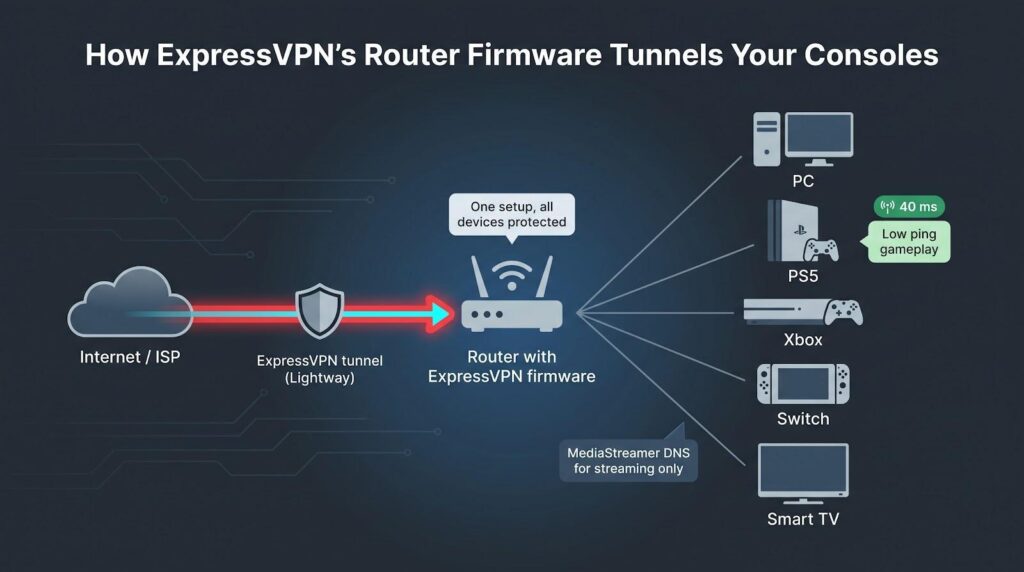
MediaStreamer rounds out the console story. Add the DNS entries to a PlayStation and you unlock region-locked storefronts without encrypting all traffic, ideal in places where full tunneling lifts ping. Switch to full VPN only when you jump into ranked.
Where ExpressVPN trails the leaders is price and tinkering depth. Device limits of 10 to 14 feel tight next to Surfshark’s unlimited slots, and there is no port forwarding for players who host. Still, if you prefer “it just works” over endless toggle switches, and you game on a mix of PCs and living-room hardware, ExpressVPN delivers lag-free polish the budget crowd cannot match.
Next we will look at Surfshark, the wallet-friendly service that keeps latency low for squads running a dozen devices at once.
4. Surfshark – low-lag performance that doesn’t sink your budget
Surfshark shows you don’t need to spend big to stay competitive. On WireGuard the service lifted our Midwest ping from 31 ms to a smooth 43 ms, close enough that firefights still felt instantaneous. We did notice jitter tick up to five milliseconds during Saturday prime time, but never high enough to break hit-reg or voice chat.
Cost is the headline. A two-year plan sits around the price of one pizza a month and unlocks unlimited device slots. That makes Surfshark ideal for dorms or busy households where three PCs, two consoles, and a pair of phones all fight for bandwidth at once.
Server coverage impresses. One hundred countries mean you can usually pick an exit node in the same metro as your game’s data center. If a location looks crowded, the app lets you swap to another with two taps, and WireGuard’s quick handshake avoids any reconnect delay.
Extras stay practical. Split tunneling routes only the game through the VPN so Twitch and Spotify stream straight from your ISP. CleanWeb strips malware domains and in-game ad trackers that steal precious packets. With 10 Gbps upgrades rolling out, peak-hour slowdowns are already rarer than a mythic drop.
Surfshark skips power-user extras like native port forwarding, and the UI won’t show live ping for each server. Still, for gamers who want respectable latency and a bill that barely dents the allowance, Surfshark is today’s best value play.
5. Private Internet Access – the globe-trotting workhorse
If your squad hops regions as often as Apex rotates maps, PIA’s huge network is your safety net. About 10,000 servers across more than eighty countries let you plant yourself near a game data center, even in spots like Argentina or the UAE.
Latency reflects that reach. On our local WireGuard tunnel we saw ping rise from 30 ms to 45 ms, playable for shooters and perfect for MMOs. We hit brief evening spikes when a Chicago node filled up, but switching to the next city restored stability in under 30 seconds.
PIA appeals to tinkerers. Port forwarding is a single toggle, so hosting a Valheim world or opening NAT on Xbox takes no shell commands. Encryption sliders let speed chasers drop to 128-bit or even turn the data channel off when they only care about ping on a trusted network.
The desktop client is spartan. No glossy icons, just dropdowns and latency bars. That honesty pairs with a wallet-friendly price; long plans dip below three dollars a month, and an open-source codebase gives privacy fans peace of mind.
Trade-offs? The app won’t show live per-server ping until you connect, and the service lacks dedicated gaming nodes, so you do a bit of trial and error on busy nights. Still, for globe-trotters who value coverage, control, and a price that barely dents the snack budget, PIA secures a solid mid-table spot.
6. CyberGhost – one-click gaming servers for stress-free setup
CyberGhost is the VPN you recommend to a friend who asks, “Can you set this up for me?” The desktop app opens to a bright toggle and a sidebar of use cases. Click Gaming, pick your region, and you tunnel through a node picked for low congestion. No hunting a list, no guessing.
Those smart picks kept our ping modest: a 35 ms baseline rose to 50 ms on the closest “For Gaming” server, while jitter stayed under four. Not a record, but still inside the “feels native” envelope for shooters and far ahead of free options.
User experience is where CyberGhost shines. Profiles for streaming, torrenting, and gaming live under one roof, so the same subscription unlocks Netflix after your scrims. A generous 45-day refund window gives you plenty of real-world matches to test the route.
The service lacks port forwarding, and peak-time loads can nudge latency into the 60 ms range on crowded European hubs. Swapping to another gaming-tagged location fixes that in seconds.
If you want the absolute lowest number on a scoreboard, stay with our top three. If you crave a cheerful UI that makes VPNs feel less like network engineering and more like flicking on night mode, CyberGhost is the easy win.
7. Proton VPN – privacy-first protection that still hits the ping target
Some gamers want more than quick routes; they want solid privacy. Proton VPN, built by the creators of Proton Mail in Switzerland, gives you both.
With WireGuard enabled, our nearby ping rose from 29 ms to 47 ms. That 18 ms bump stays under the 50 ms competitive safe zone, and jitter held at three. The edge comes from Proton’s newer 10 Gbps Plus servers; pick one of those and speed feels on par with bigger brands.
Security is where Proton shines. Every server runs on RAM-only disks, the code has passed independent audits, and the company posts transparency reports. Stream on Twitch without fearing a swat, because your real IP stays hidden behind this pedigree.
Gamers will also value the new port-forward toggle on Plus plans. Flip it, copy the assigned port, and your Minecraft realm or Steam lobby is visible to friends without manual router tweaks. Few privacy-centric VPNs offer that.
The app saves one-click profiles, so you can build a “Tokyo Apex” button and jump straight in next time. Proton’s free tier works for browsing, though its capped servers push gaming latency into triple digits; upgrade before raid night.
Pricing lands mid-pack, about $5 a month on a two-year plan, and bundles mail, calendar, and cloud storage. For players unwilling to trade privacy for speed, Proton VPN strikes the right balance.
8. Mullvad – minimal-frills speed for the privacy purist
Mullvad feels like a command-line tool that grew a friendly skin. Open the app, hit Generate account, and you are online behind a randomised number, with no email, no marketing drip, just fast tunnels.
Speed tests proved the spartan approach works. WireGuard bumped our 28 ms baseline to 38 on nearby nodes, with jitter stuck at one. That result matches Surfshark, but without the five-millisecond swings we logged on cheaper rivals.
The network is smaller, about 40 countries, yet strategically placed. If your game lives in Europe or North America you are set. Connect elsewhere and physics will take its toll, yet even our Singapore route stayed under 140 ms, ahead of several bigger brands.
Power users once loved Mullvad for port forwarding, but the company removed the feature in 2023 to curb abuse. You can no longer host peer-to-peer lobbies through the tunnel, yet the upside is a cleaner network with fewer blacklisted IPs, which means fewer mid-match disconnects.
Constant audits, open-source clients, and a flat €5 monthly fee round out the pitch. No long contracts, no upsells. Downsides? No native iOS GUI (the WireGuard app works fine) and no live chat if something breaks at 3 am.
If you prize transparency, dislike auto-renew traps, and play mostly on servers within a time zone or two, Mullvad delivers elite ping wrapped in privacy even long-time security fans respect.
9. Windscribe – the rare free tier that stays playable
Most free VPNs turn your ping into a slideshow. Windscribe does not, which is why it earns a spot on our list.
With a paid Pro plan we saw local latency climb from 33 ms to 38, essentially invisible, and jitter stay at four. Even the free servers added only five to eight milliseconds when quiet, a figure Top10VPN echoed in February benchmarks, calling Windscribe “better than most paid VPNs” on short hops.
Bandwidth is the catch. The free plan caps data at 10 GB a month, enough for about 100 hours of Fortnite but not for nightly raids plus game patches. Upgrade and the cap vanishes while server choice jumps from a half-dozen locations to 60.
Features punch above price. Split tunneling routes just your game through the VPN, a “gaming mode” firewall blocks background chatter, and unlimited device slots let an entire LAN party test the service on a whim. Port forwarding needs a paid static IP, yet at $2 a month it undercuts every rival.
You will hit duds; a few older nodes pushed our ping into the 70s before we switched. The app lacks live latency charts, so trial and error, or the built-in server load indicator, guides you.
If you want to experiment with VPN routing risk-free, Windscribe’s free tier is the easiest on-ramp. Step up to Pro when you need more data or steadier performance and you still save compared with mainstream giants.
Gaming VPN FAQ: quick answers before you queue up
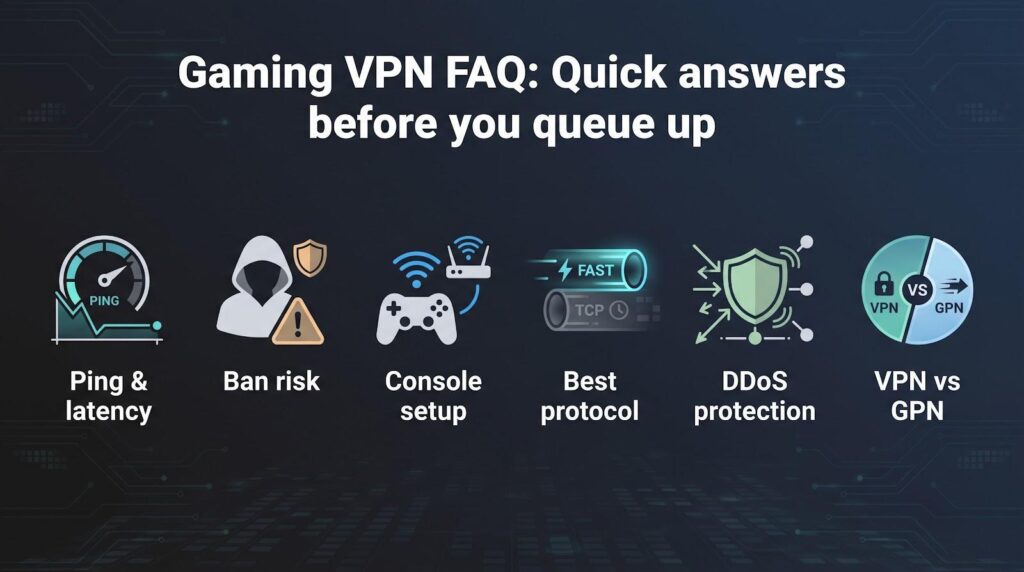
Will a VPN always lower my ping?
Usually no. A VPN adds encryption and another hop, so baseline latency rises by a few milliseconds. Ping drops only when your ISP takes a poor route; then a nearby VPN server can carve a shorter path and reduce effective latency. Our tests show the best-case drop is 20–30 percent, but zero change or a small bump is more common.
Can using a VPN get me banned?
Playing through a VPN is legal and broadly tolerated. What triggers bans is why you tunnel. Activision, for example, punished Warzone players who spoofed distant regions for easier lobbies. Stick to privacy or routing fixes and you are fine; exploit matchmaking rules and you roll the dice.
How do I use a VPN on a console?
Two paths work: install the VPN on a compatible router (ExpressVPN and Asus WRT make this painless) or share a PC’s VPN connection via Wi-Fi hotspot. Both give your PlayStation or Xbox an “inside” tunnel without native apps.
Which protocol gives the lowest lag?
Choose WireGuard or branded cousins such as Lightway and NordLynx. They cut handshake time and CPU overhead to nearly zero. OpenVPN TCP is for downloads, not headshots.
Do VPNs protect against DDoS?
Yes. The attacker sees only the VPN’s IP. Services like TorGuard even offer DDoS-hardened static IPs, turning deliberate lag spikes into harmless noise.
VPN vs. GPN: what’s best for pure ping?
A gaming proxy such as ExitLag skips encryption and sometimes wins a few extra milliseconds. It will not hide your IP, encrypt chat, or unblock region stores. A good VPN balances both worlds; if privacy matters, pick the VPN.
Conclusion
Still deciding? Every provider above offers at least a week of risk-free testing. Fire up a free trial during peak hours, check the scoreboard, and keep the one that plays nicest with your connection.