

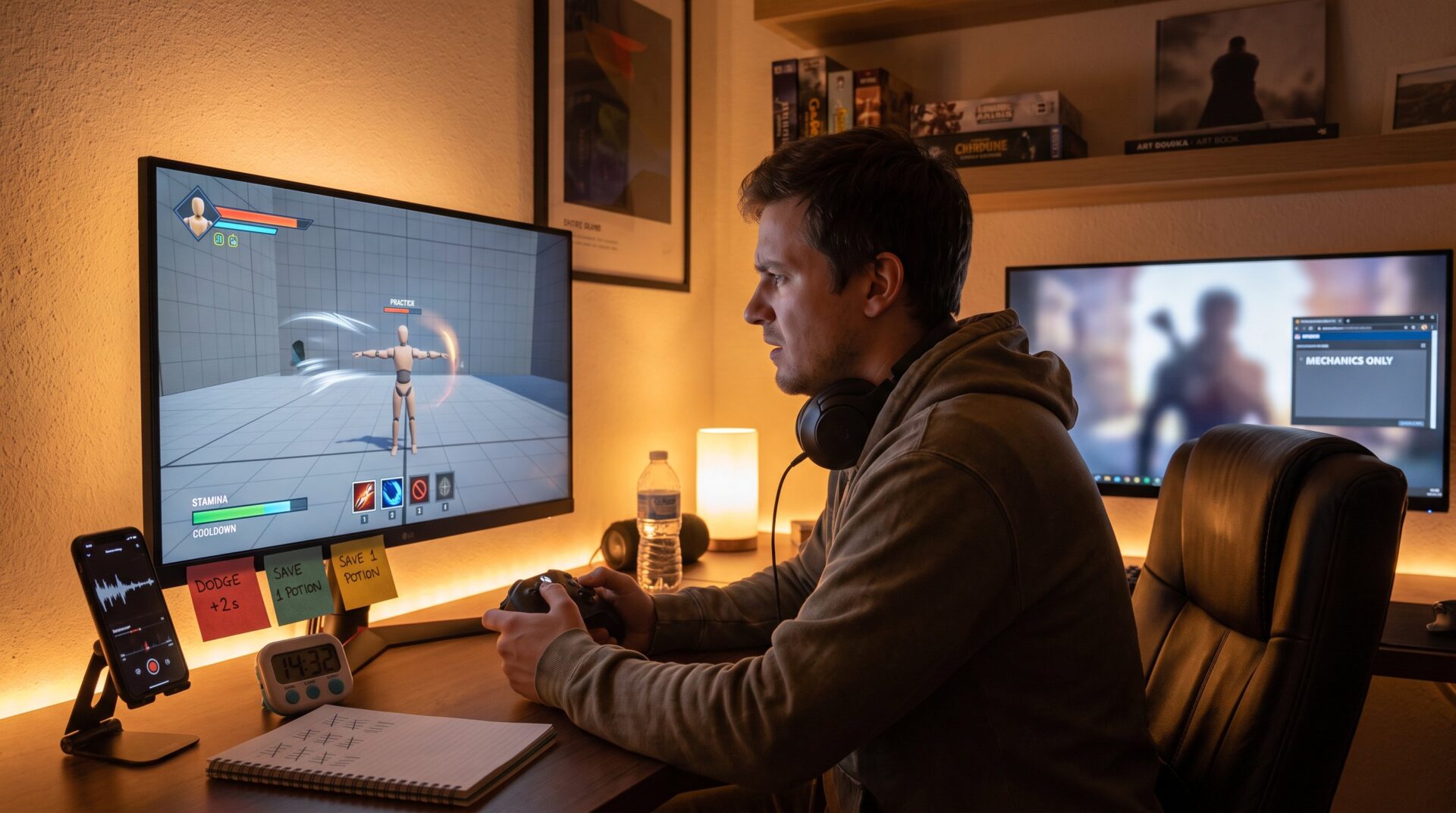
How to Beat Difficult Bosses Without Spoiling the Whole Game begins with a simple promise: preserve surprise while learning to win. Players who want the thrill of discovery often hesitate to read full walkthroughs. This guide shows practical, spoiler-free tactics that build skill, reveal systems, and protect story moments. It assumes the reader wants actionable steps, patterns to watch for, resource math to practice, and community options that avoid plot reveals. The approach favors repeated, mindful attempts over shortcuts, so players keep the emotional payoff of a boss victory intact.
Key Takeaways
- Avoid spoilers to preserve the emotional impact and learn transferable skills while beating difficult bosses.
- Master the game’s core mechanics, such as controls and resource management, before attempting boss fights to increase success.
- Observe enemy patterns and telegraphed attacks carefully in initial attempts to anticipate and counter boss moves.
- Practice movement, timing, and resource budgeting precisely to maintain positioning and optimize skill usage during fights.
- Use spoiler-free community resources and ask targeted questions to gain help without losing story surprises.
- Adopt a data-driven mindset by learning from each failure, adjusting positioning and strategy one variable at a time for continuous improvement.
Why Avoid Spoilers And The Benefits Of Solving Bosses Yourself
Fact first: avoiding spoilers preserves surprise, drama, and learning. When players discover a boss’s twist or final form on their own, the emotional impact increases and the fight feels earned. Solving bosses themselves also teaches transferable skills: pattern recognition, resource budgeting, and muscle memory. Those skills improve future runs and other games, not just that one encounter.


Players who resist full spoilers gain three measurable benefits. First, retention of mechanics improves: a player who figures out a parry window remembers it longer than someone who skimmed a guide. Second, satisfaction scores rise, many report a stronger memory of victory when they earned it. Third, adaptability grows: discovering a boss’s trick forces on-the-fly strategy adjustments that strengthen overall play.
Practical warning: curiosity leads to accidental spoilers. Avoid browsing long threads or image-heavy posts. Instead, target short, mechanic-focused materials that keep story details hidden.
Master The Game’s Core Mechanics Before Facing The Boss
Fact first: core mechanics are the biggest predictor of success in boss fights. A strong grasp of controls, stamina and cooldown behavior, and basic combos reduces the need for spoilers.
Learn the controls until they are second nature. Spend time in a safe area practicing dodge windows, block timing, and ability casts. Concrete drill: spend ten uninterrupted minutes practicing a single dodge and recovery loop until the recovery feels immediate. This lowers reaction latency when the boss telegraphs an attack.
Understand resource rates. Measure how many healing items the character uses in a trial arena run. If one run burns three potions in two minutes, the player knows to save or adjust gear. This kind of precise counting prevents running out mid-fight.
Use training and sandbox modes if a game offers them. Those modes let players test how damage scales with weapon upgrades and how status effects stack, without revealing boss phases. Knowing these numbers shortens learning curves and keeps the story intact.
Learn Enemy Patterns And Telegraphed Attacks
Fact first: most difficult bosses rely on telegraphed moves and repeatable patterns. Observing three attacks in a row usually reveals the boss’s basic loop.
Start each attempt with observation, not aggression. Spend the first minute noting visual cues: a wind-up animation, a glow, or a subtle camera shift. Pair those cues with audio confirms, many games add a distinct sound milliseconds before a heavy attack. Mark these in memory: e.g., “glow = spin” or “low hum = leaping slam.”
Record simple notes between attempts. Short, factual entries like “phase 1: forward charge, shield bash” help without chronicling story beats. Over four to six attempts, patterns emerge. That knowledge lets the player time dodges and reserve resources for predictable big moves.
Practical hack: use a phone voice memo to capture cues immediately after an attempt. It’s quick and spoiler-safe.
Practice Movement, Timing, And Resource Management
Fact first: movement and timing win more fights than raw damage. Positioning controls damage intake and opens windows for counterattacks.
Work on spacing drills. Pick a neutral enemy or a training dummy and practice maintaining a distance that avoids the boss’s forward lunges but stays close enough to react. Concrete practice: spend five minutes practicing backstep-into-attack to build a rhythm.
Time consumables and cooldowns precisely. Players should know the exact cooldown on their most used skill, e.g., a 30-second ultimate, and plan when to use it relative to a boss’s heavy move. Count in-game seconds during practice runs to calibrate instinctive timing.
Resource example: if a player has five healing flasks and the fight averages 12 minutes, they should budget roughly one flask every two to three minutes, holding one in reserve for an unexpected phase change. These small calculations keep decisions clear and spoiler-free.
Use Spoiler-Free Resources And Community Help
Fact first: useful help exists that avoids story details. Players can get build advice, control breakdowns, and mechanic explanations without encountering plot spoilers.
Limit searches to terms like “mechanics,” “controls,” or “optimal builds.” Community hubs and official FAQs often separate mechanics from story, letting players find precise guidance. For targeted help, ThinkofGames maintains a pillar resource that organizes walkthroughs and strategies: readers can link into broader topics through a short guide on game resources. This page helps players choose the right type of help without hunting spoilers.
Other relevant internal articles include compact primers on choosing walkthroughs and reading maps. A player deciding whether to consult a guide can use the short checklist in the article on choosing the right walkthrough to avoid versions and spoilery content. For spatial awareness questions, a quick read of the reading maps guide clarifies objective markers without boss scripts.
Community etiquette: ask specific, narrow questions. For example, “Does stamina stop during heavy attacks?” gets a mechanic answer without narrative revelation. Avoid phrases like “how to beat the final form” or “what happens after,” which invite spoilers.
Combat Strategies For Difficult Bosses: Mindset, Positioning, And Adaptation
Fact first: mindset shapes outcomes as much as gear. Players who accept repeated failure as data learn faster than those who chase aggression.
Adopt a lab mindset. Each death is a data point: note what triggered it and change one variable next attempt. For example, if a flank attack always connects, change position and try again. Small, single-variable experiments reveal cause and effect.
Positioning rules: control angles and avoid corners. A boss with sweeping arcs punishes being pinned. Players should favor open space or predictable cover. If the map has destructible objects, use them to break line-of-sight and reset boss targeting.
Adaptation examples: switch to a defensive build when bursts overwhelm healing, or use a ranged loadout if close-quarters attacks prove lethal. If repeated attempts stall, consult the ThinkofGames piece on achievement and trophy help for non-spoiler tips that align goals with strategy. That article shows how marginal adjustments, like changing playstyle to satisfy a trophy constraint, deliver measurable improvements.
Conclusion
Beating difficult bosses without spoilers requires disciplined practice, attention to patterns, and smart use of spoiler-free resources. Players preserve the story’s emotional weight while building skills that transfer to future challenges. The most valuable moves are simple: observe first, practice mechanics second, and change only one thing per attempt. With patience and measured experimentation, players can reach victory and still keep the surprise.