Ontario’s digital entertainment landscape rarely gets summed up accurately by focusing on just one category. A resident’s evening might involve comparing licensed online casino operators, watching a Call of Duty League match streamed from a Toronto studio, or downloading a new release through a distribution service built for PC libraries. Five platforms and experiences capture most of where that activity actually happens, starting with one of the more established names in casino coverage.
1. Casino.org’s Ontario coverage
Casino.org in Ontario covers licensed operators, game mechanics, and the regulatory framework overseen by the AGCO and iGaming Ontario. Its catalogue extends well beyond individual operator reviews. The reporting has tracked the province’s iGaming market since it opened to private operators in April 2022, functioning less like a single review site and more like an ongoing record of how the market has developed. Players trying to understand why a particular safeguard exists, or how a licensing requirement actually works, tend to find that kind of sustained coverage more useful than a one-off comparison piece.


2. Ontario esports betting and prediction markets
A separate corner of Ontario’s digital entertainment scene has grown alongside its casino sector: platforms letting fans place wagers or trade contracts on esports outcomes, from Call of Duty League matches to international Valorant events. Several guides covering these markets have popped up as competitive gaming has drawn bigger audiences to the province, walking newcomers through how contract-based wagering actually differs from a standard sportsbook bet. Interest tends to spike around major local events, when Toronto hosts a franchised match or an international tournament draws teams from outside Canada entirely.
3. Toronto’s franchised esports teams
OverActive Media, headquartered in Toronto, owns two franchised competitive teams: Toronto Ultra in the Call of Duty League and Toronto Defiant in the Overwatch League. Both leagues have brought tournaments to the city, including matches held at the Mattamy Athletic Centre, formerly Maple Leaf Gardens, drawing thousands of fans over several days.
Ontario has hosted international events outside those two franchises too. Valorant Masters Toronto 2025 brought teams from multiple regions to compete for a prize pool exceeding one million dollars. Competitive gaming at this scale needs infrastructure most casual players never see. Toronto has built enough of it to host events on that level more than once.
4. PC distribution platforms
Most Ontario PC gamers rely on digital distribution services to acquire and manage their libraries, separate from casino content or competitive play entirely. Platforms like Steam remain the primary way players buy, update, and organize titles. That infrastructure connects casual players to the same industry that produces the province’s esports scene, even if most people never think about the distribution layer underneath the games they’re playing.
Libraries built through these services tend to grow substantially larger than what a typical console player accumulates, partly because digital storefronts run frequent sales and partly because there’s no physical shelf space limiting how many titles someone owns. That habit has shaped how a lot of Ontario PC gamers actually spend their time.
5. Social gaming spaces built around consoles and VR
Toronto’s gaming culture also plays out somewhere less digital: console bars, retro arcades, and a growing number of VR cafes scattered across the city. These venues offer a communal, party-style alternative to solitary online play. Demand for them has risen alongside collegiate esports and the city’s broader tech scene.
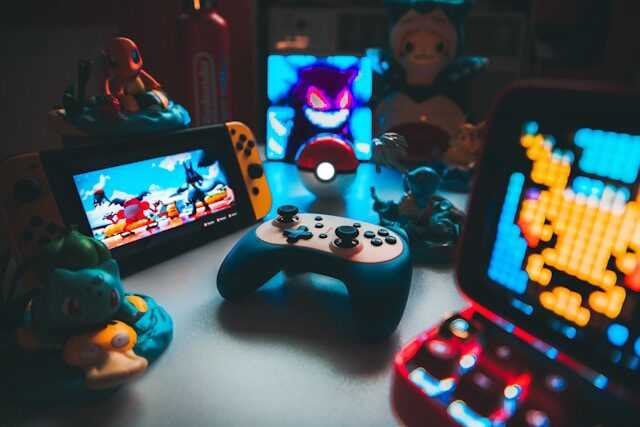
Console bars in particular have become a fixture of Toronto’s social gaming culture, giving players a reason to gather somewhere physical rather than log in from separate homes across the city. Nintendo Switch nights have become one of the more reliable draws at these venues, in part because the format works for people who don’t consider themselves serious gamers at all.